



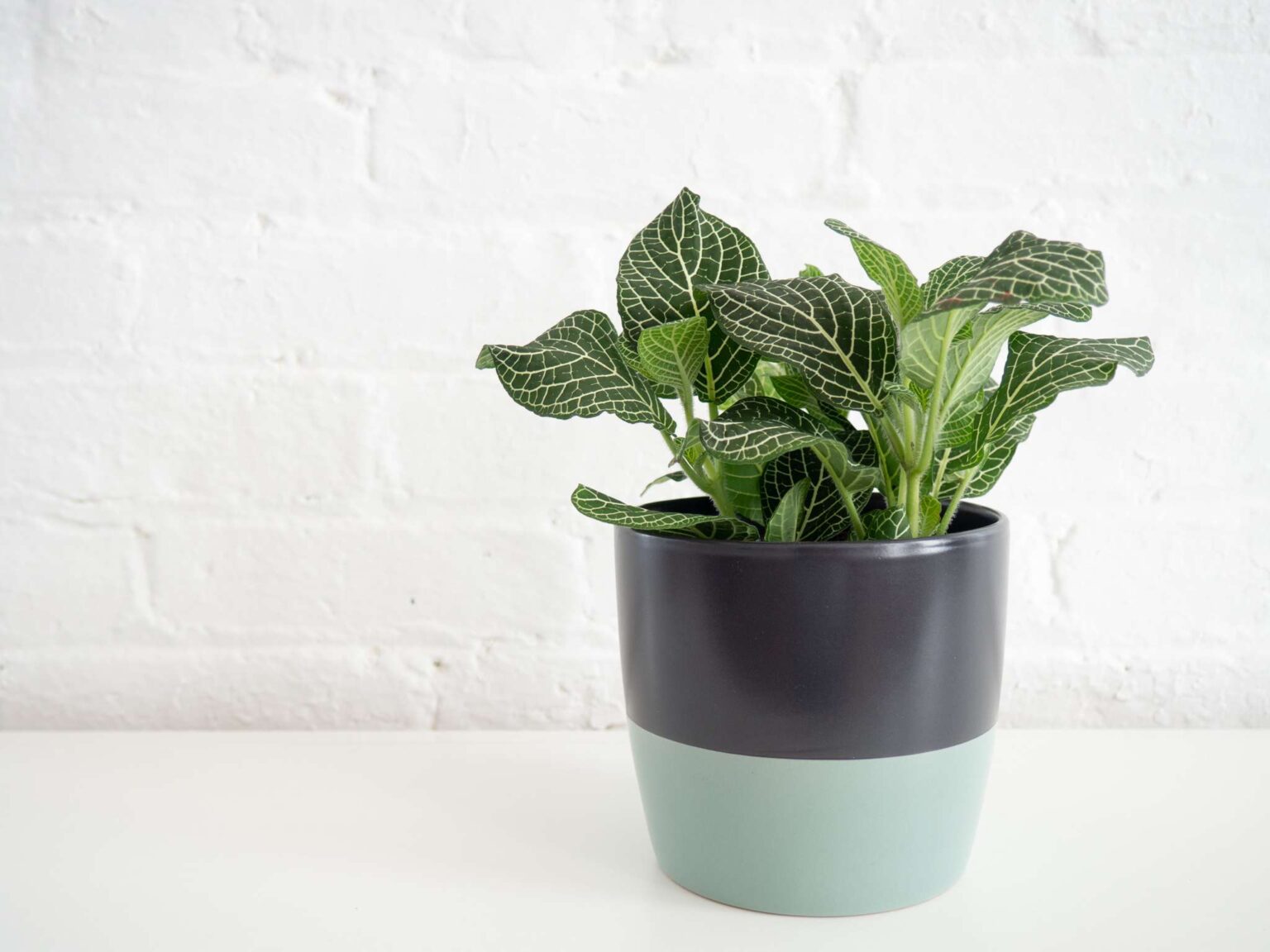
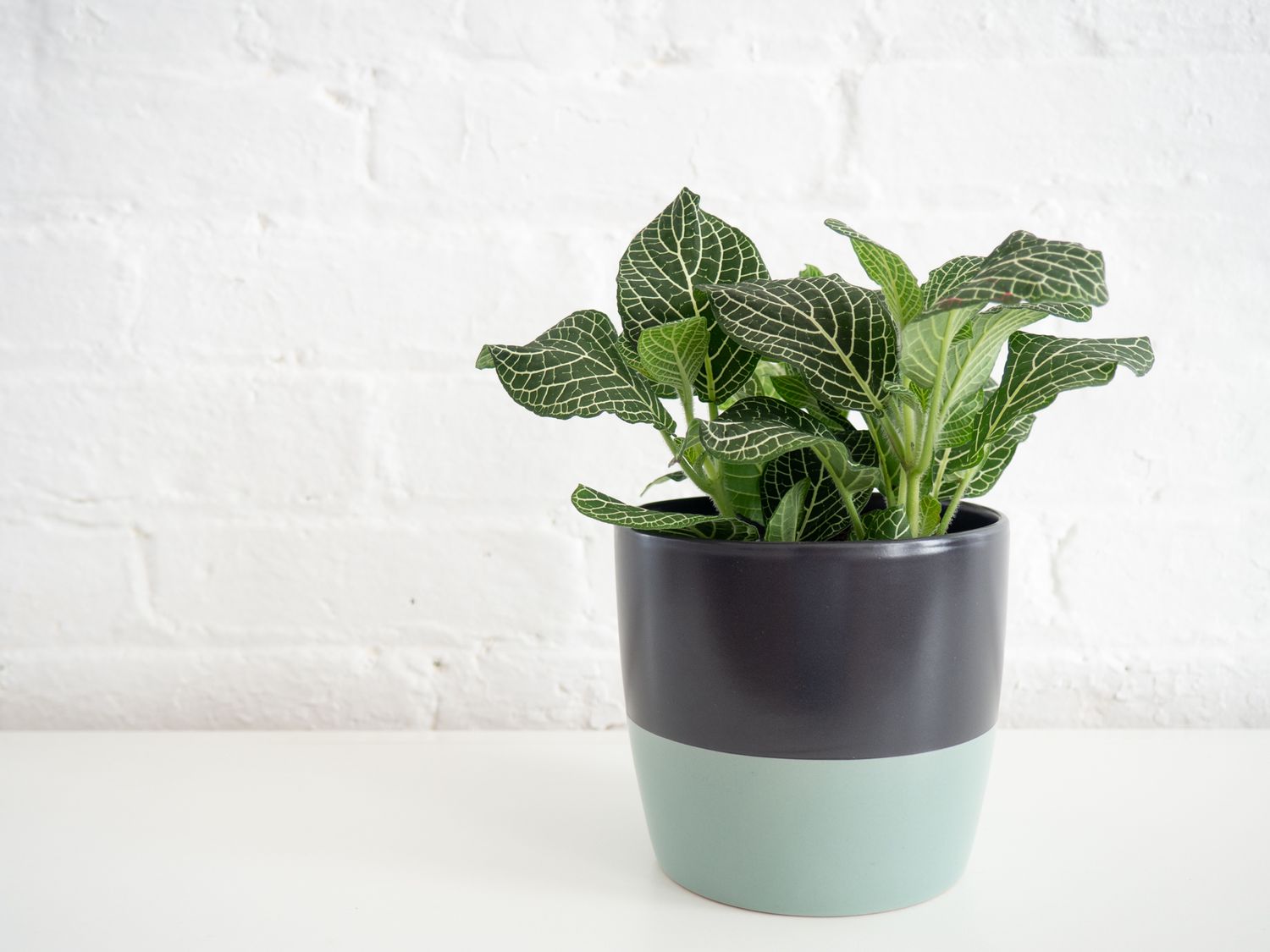
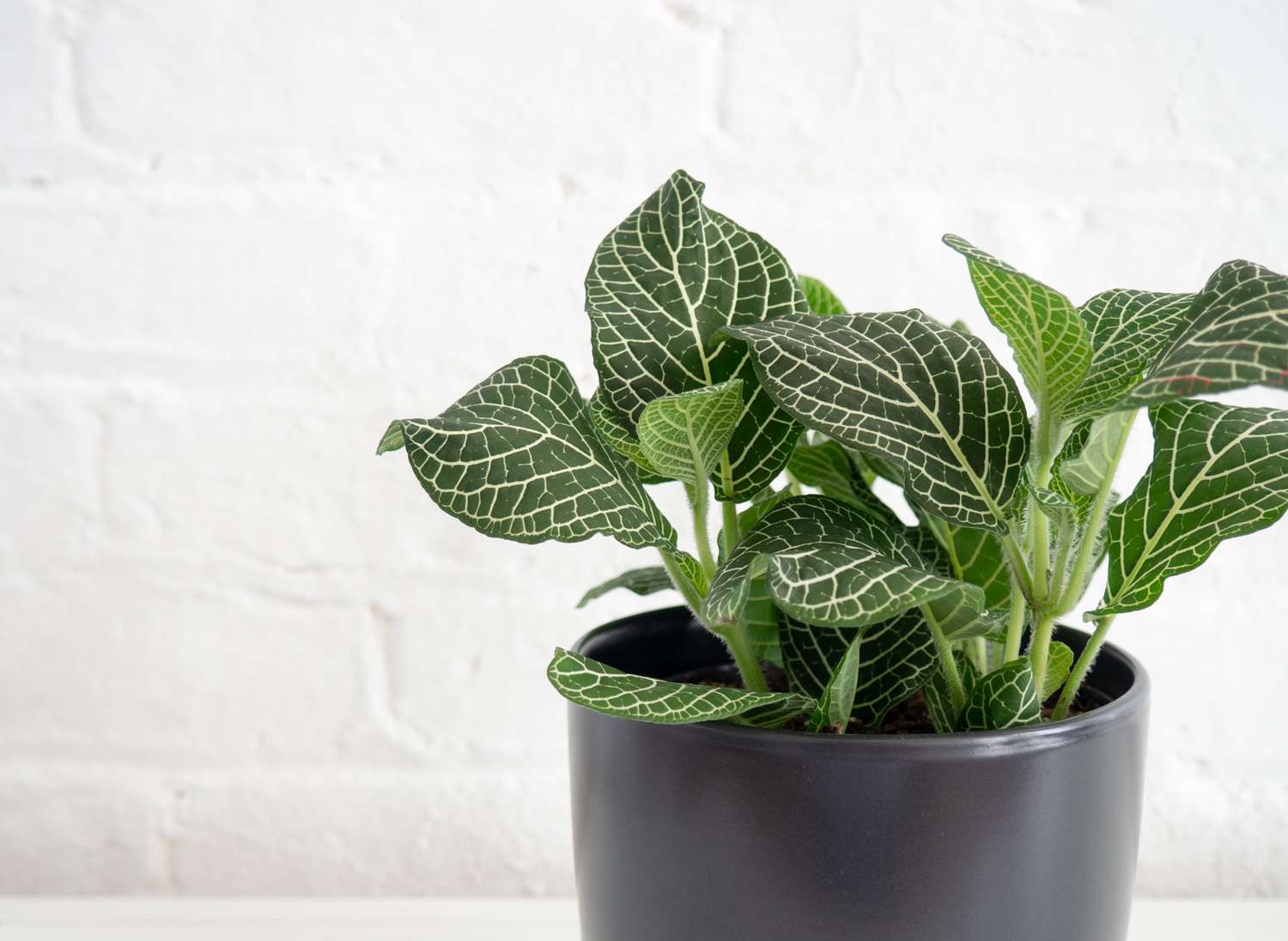
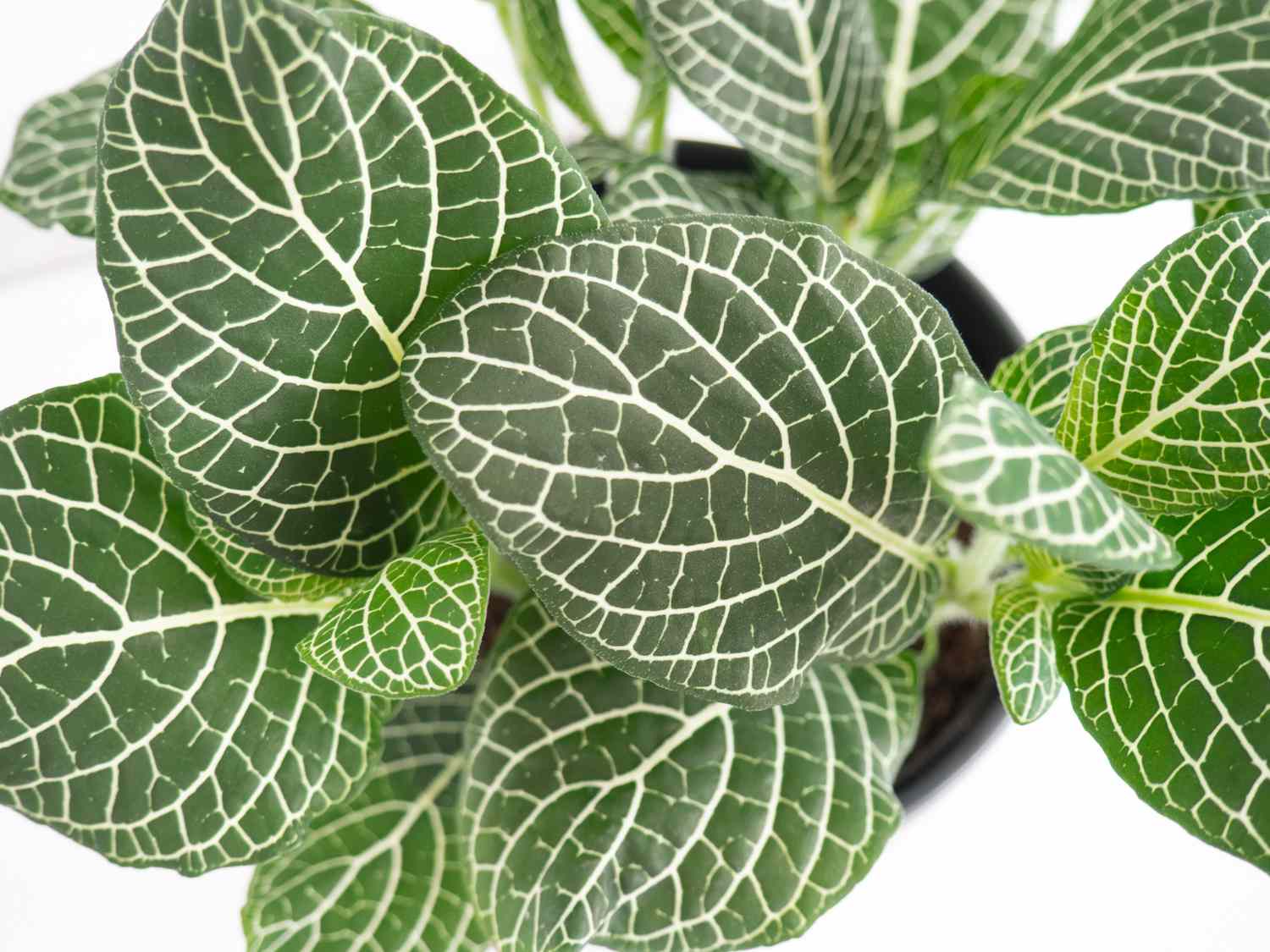
Nerve plants (Fittonia albivenis) is commonly used as a potted houseplant for decor and livelihood. It is an evergreen perennial with deep green, egg-shaped leaves. Although the most popular vein color is a silvery-white, they come in a variety of colors including pink, red, green, and white.
They are not tall plants, growing around three to six inches, but do have a greater trailing spread usually between 12 and 18 inches. They are slow to grow and rarely flower indoors.
In a frost-free climate, nerve plants can be grown as a creeping ground cover in areas with filtered sun, and will bloom with significant reddish or yellowish-white spikes when the conditions are right.
jardineria Profesional / Alonda Baird
| Common Names | Nerve plant, mosaic plant, fittonia, painted net leaf |
| Botanical Name | Fittonia albivenis |
| Family | Acanthaceae |
| Plant Type | Perennial |
| Mature Size | 3–6 in. tall, 12-18 in. spread |
| Sun Exposure | Partial |
| Soil Type | Moist but well-drained |
| Soil pH | Acidic |
| Bloom Time | Summer |
| Flower Color | White, red |
| Hardiness Zones | 11 (USDA) |
| Native Area | South America |
Nerve Plant Care
As beautiful as it is, never plant is somewhat temperamental and tricky to grow as a houseplant.
- Place it in a north-facing window where it can get bright, indirect light.
- Keep soil constantly moist. If stems flop over, that’s a sign it needs water.
- Use a commercial potting mix for indoor plants that is peat- or coco coir-based.
- Nerve plant prefers relatively high humidity, though it should do okay in normal household levels.
Light
As a tropical plant that naturally grows in the humid, bright shade of tropical forests, this plant prefers similar conditions when grown as a houseplant. It dislikes full sunlight, preferring bright, indirect sun, such as that offered by north-facing windows. It’s can suffer from leaf burn in direct afternoon sun.
Keep a nerve plant under fluorescent lights or near diffused light coming in from a sheer curtain. Another good location is in the bathroom, even if there’s low lighting.
Soil
Nerve plant grows well in standard potting soil with a peat moss base. It prefers a slightly acidic soil pH. The soil should retain some moisture but should also drain well.
Water
Keeping a nerve plant appropriately moist can be a challenge. It is prone to collapse if it’s allowed to dry out, and although it will recover quickly if thoroughly watered, repeated fainting spells will eventually take their toll on the plant.
At the other extreme, nerve plants that are allowed to stagnate in water will develop yellowed, limp leaves. If you are unsure, use a moisture meter to help you determine when to water.
Temperature and Humidity
Nerve plant thrives at temperatures around 70°F but will tolerate a range from the low 60s to low 80s. These plants prefer humid conditions similar to those found in rainforests, so using a room humidifier may be helpful; they also do well in steamy bathrooms.
Terrarium Plants
Nerve plants thrive in terrariums. Other common terrarium plants to grow with Fittonia include ferns, polka dot plants, creeping fig, and spike moss.
Fertilizer
During its growing season, feed plants weekly with a weak dose of liquid fertilizer formulated for tropical plants. A balanced 5-5-5 fertilizer diluted to half strength is a good formulation.
Types of Nerve Plant
Cultivars of F. albivenis are divided into two different groups according to the venation of the leaves: the Argyroneura Group with white veins and the Verschaffeltii Group with red or pink veins.
- ‘Minima’ is a low-growing variety, which makes it a preferred choice for a small terrarium. It has small, delicate green leaves with silver veins.
- ‘Pearcei’ has deep green leaves with bright red fishnet veins.
- ‘Frankie’ is a hybrid with light pink leaves that have dark brown, scalloped edges.
- ‘Fortissimo’ is another low-growing variety. It has vibrant green foliage with red and pink veins.
- ‘Red Star’ stands out with its deep red, broad oval leaves featuring that have frilled margins and pink-tan veins.
Pruning
Nerve plant grows quickly in the right conditions, and if the stems grow leggy, pinching off the tips will keep the growth full and bushy. Because the flowers are insignificant and boring, pinching off the buds will also help keep the foliage full.
Propagating Nerve Plant
Nerve plants propagate readily from stem-tip cuttings, taken in late spring or early summer, at the same time you repot the plant. Taking stem-tip cuttings is the best way to propagate nerve plants; planting its seeds isn’t as effective.
- Take cuttings. Make stem-tip cuttings at an angle using sharp pruners. (A stem-tip cutting is when you cut a piece of the stem that also includes the top of the stem where new leaves form.) Include at least two growing nodes on the bottom of the cutting to obtain the best results.
- Plant cutting. Bury the bottom of the cutting in a small pot, about 4 inches in diameter, filled with a peat-based soil mix. (Rooting hormone is optional.)
- Keep soil moist. Water the soil so that it’s moist but not soggy. Place plant in a spot that gets bright, indirect light. Expect roots to grow within two to three weeks.
Potting and Repotting Nerve Plant
Any conventional potting soil mix and standard houseplant pot with bottom drainage holes will work for nerve plants. Repot annually in spring or early summer, always using fresh potting soil to prevent soil compaction and water-logging.
Common Pests
Insect problems include mealybugs and aphids. Infestations should be treated immediately. An insecticidal oil, like neem oil, works well—and keep affected plants isolated to prevent the bugs from spreading to other indoor plants.
Pest to Watch
Because nerve plant’s soil needs to be kept moist, watch out for fungus gnats. Fungus gnats lay eggs in the soil, and larvae can do a lot of damage and kill the plant from the roots up. Sticky traps are a great way to get rid of fungus gnats.
Common Problems with Nerve Plant
Many of the problems associated with nerve plants are the same ones that affect other tropical houseplants. A nerve plant may appear to be dying but tweaking its environment often saves it.
Leaves Turning Yellow
When leaves turn yellow it’s the result of too much water. Use a pot with drainage holes to prevent soggy soil.
Leaf Drop
Leaf drop is usually the result of cold temperatures or drafts. Try to mimic the tropical conditions where this species naturally grows.
Dry, Shriveled Leaves
This usually indicates that the plants are not receiving enough humidity, or are receiving too much direct sun. Use a room humidifier in winter when humidity levels drop significantly. Keep your nerve plant out of direct sunlight.
Droopy Leaves
Droopy leaves are usually a sign of a watering issue. Check the soil moisture level to determine whether your plant has been over or under watered.
Dry soil and crispy, droopy leaves usually indicates underwatering. If you have been watering around or more than once a week, try scaling back to determine if overwatering is the source of your nerve plant’s droopy leaves.
If all else fails, try giving your plant a more humid atmosphere.
-
Are nerve plants easy to care for?
Nerve plants aren’t difficult to care for, but they are temperamental since they need lots of humidity and a warm climate. Keep temperatures over 70°F, away from drafts, and in a humid spot. Soil should always be moist but not water-logged.
-
Can nerve plants grow indoors?
Yes, unless you live in USDA zone 11 or higher, nerve plants must be grown indoors.
-
How fast do nerve plants grow?
Nerve plants are slow-growing indoors.
-
What are the benefits of planting nerve plants?
Nerve plant is an attractive, pet-friendly, and low-maintenance houseplant. Sometimes it is touted for purifying air, but it would take far too many plants for this to be a noticeable effect.
-
Do nerve plants do well in bathrooms?
Nerve plant is an understory rainforest plant, so placement in a bathroom or beside a room humidifier is ideal; try to give it medium (50-60%) humidity.