



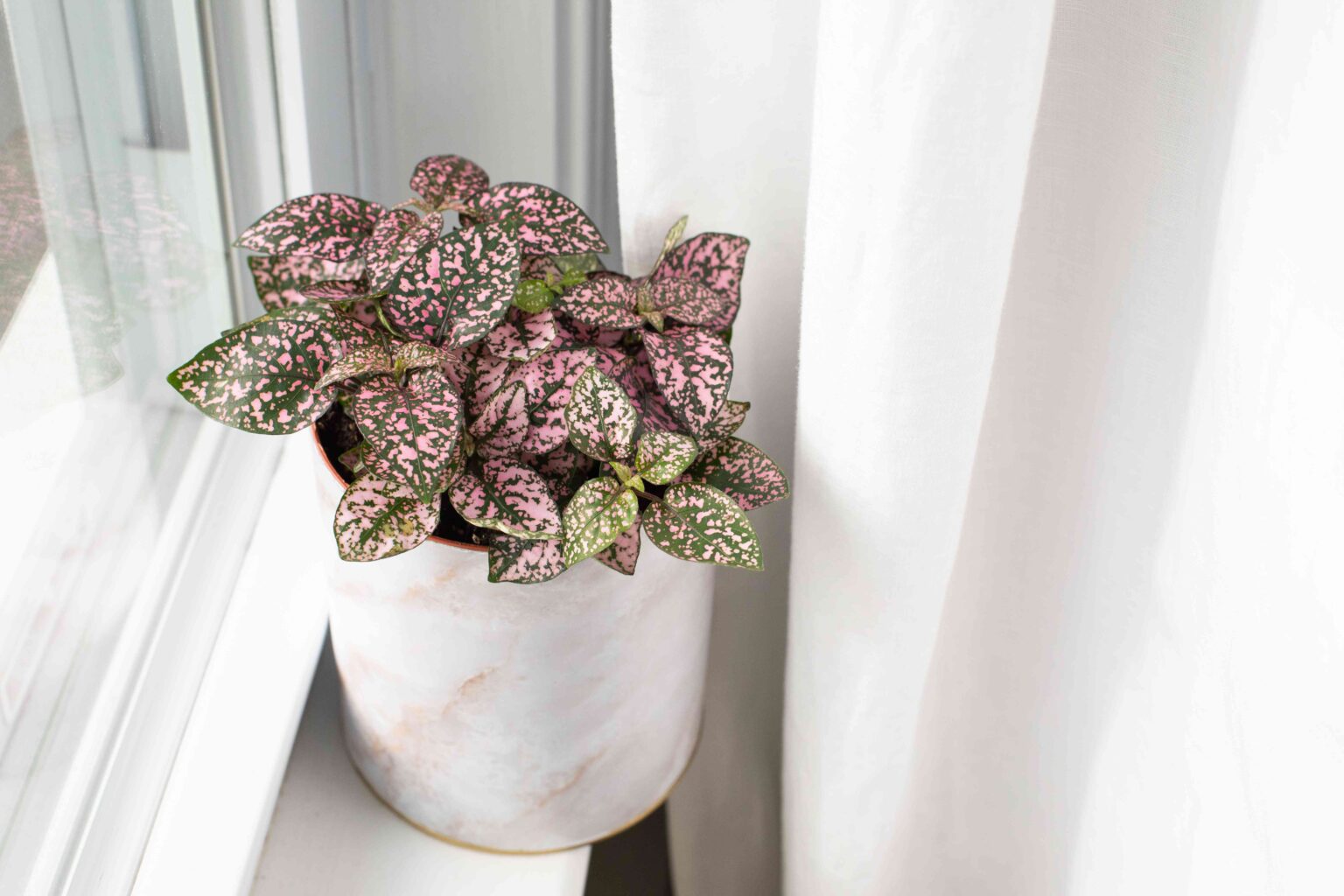
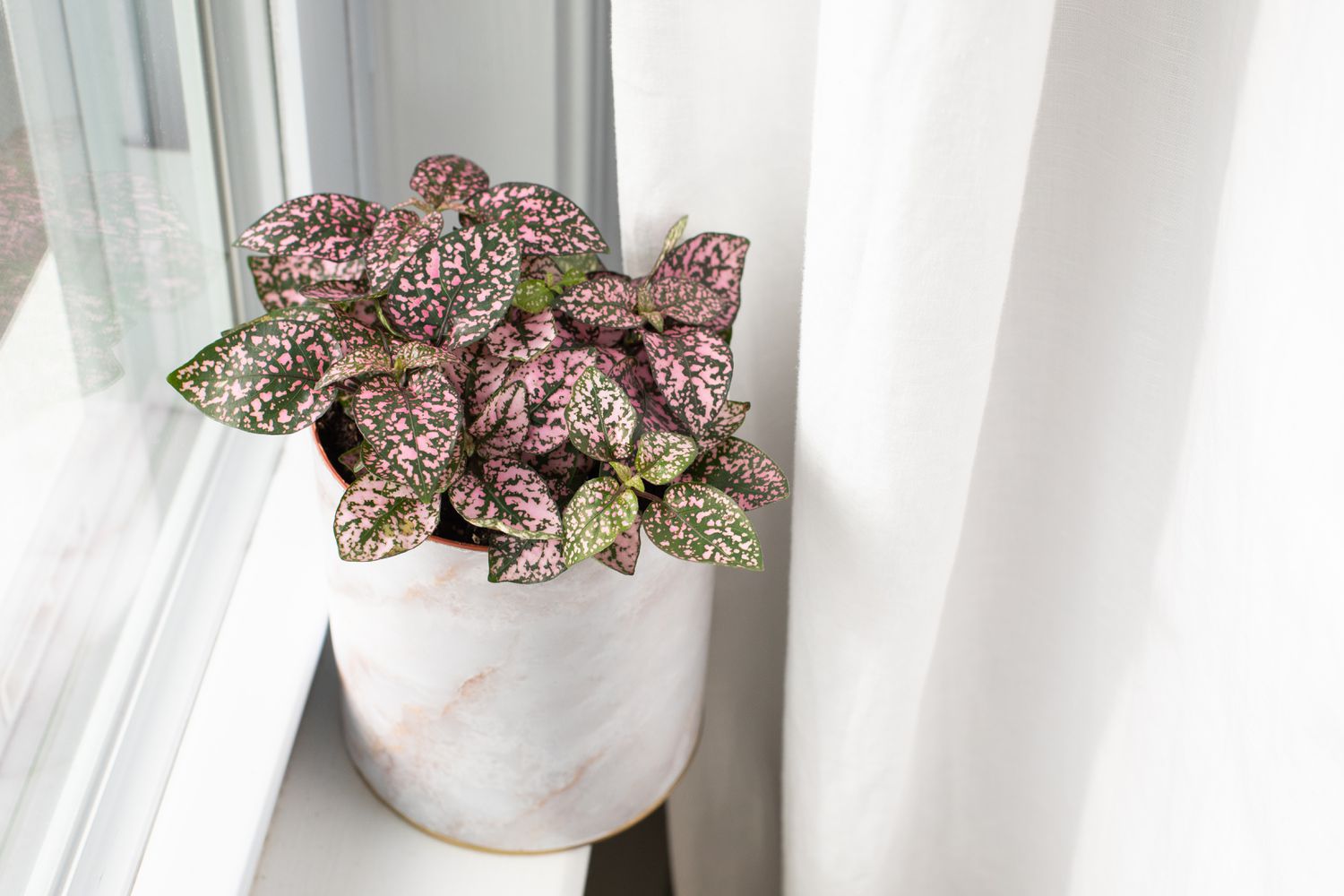
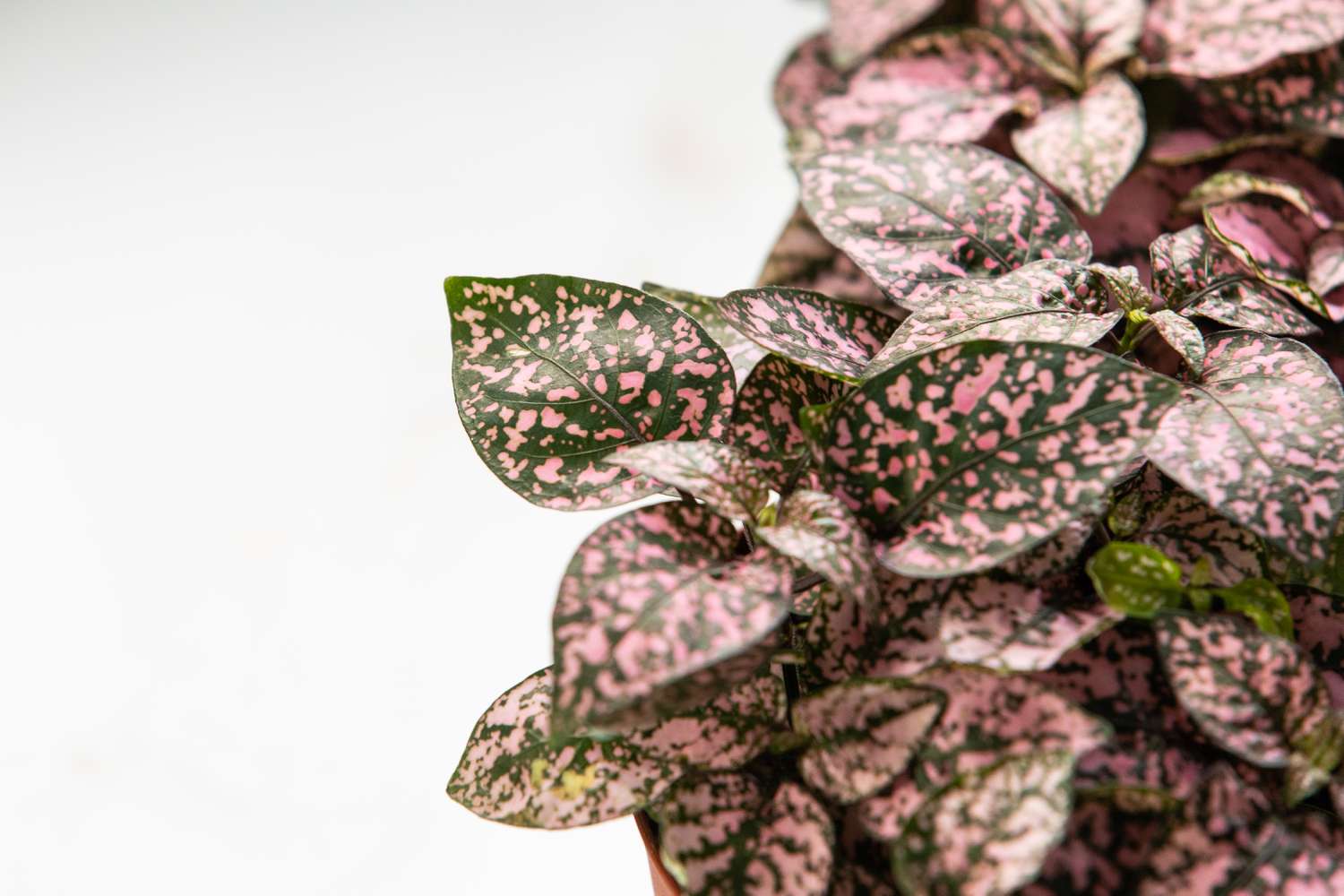
Polka dot plant (Hypoestes phyllostachya), sometimes called freckle face plant, is an herbaceous warm-climate perennial with brightly variegated leaves. The most common polka dot plants have green and pink-flecked leaves, but other varieties can have red, white, and or even purple variegation. Polka dot plants are super easy to grow, and they grow best in warm, humid conditions with bright, indirect light or partial shade.
jardineria Profesional / Leticia Almeida
Because they are native to warm climates, many gardeners treat them as annuals when planted outdoors. Polka dot plants are not considered invasive plants in temperate climates, but they are considered invasive in Australia and some other tropical areas, including Hawaii.
jardineria Profesional / Photo Illustration by Amy Sheehan / Leticia Almeida
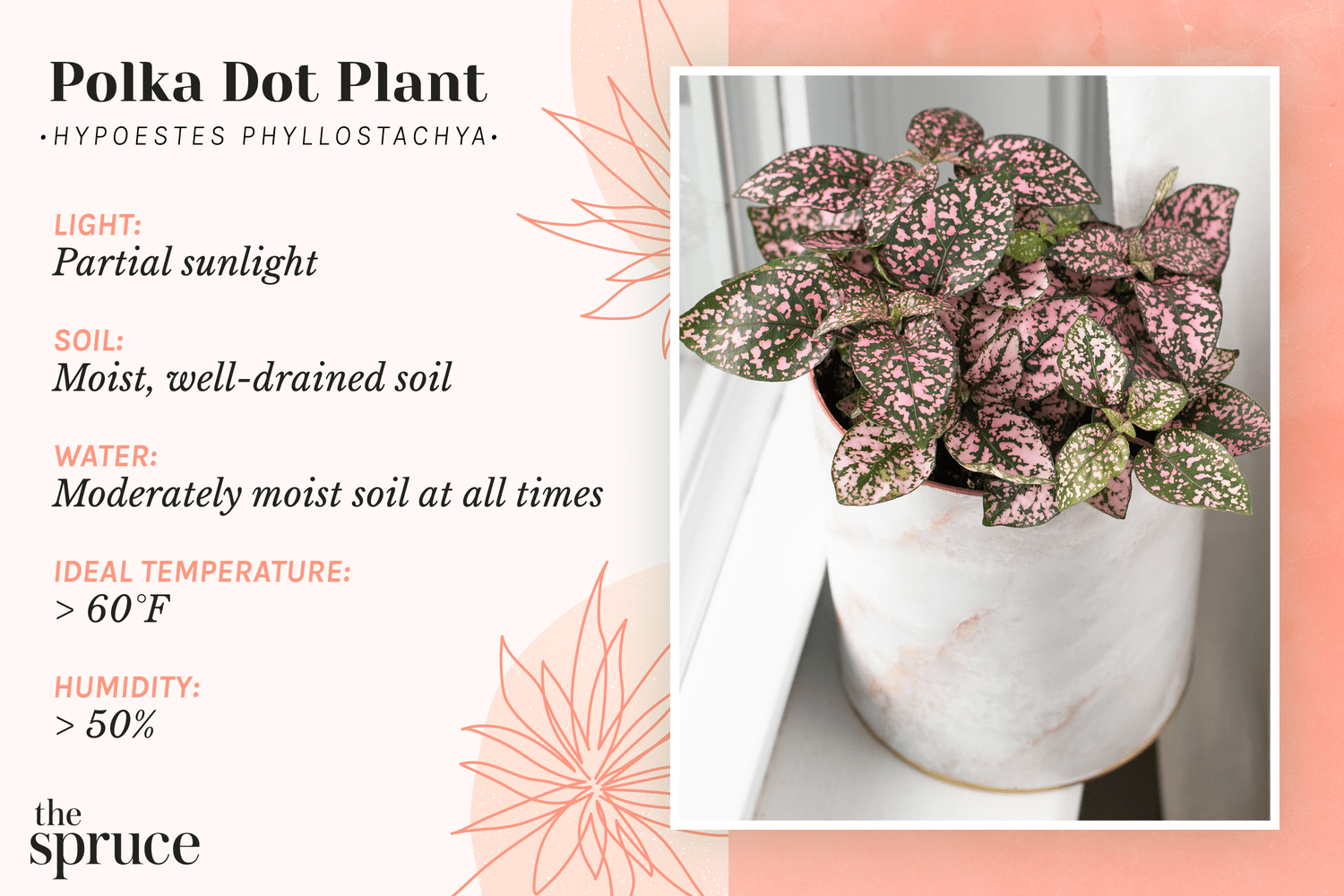
| Common Names | Polka dot plant, flamingo plant, freckle face, measles plant, pink dot |
| Botanical Name | Hypoestes phyllostachya |
| Family | Acanthaceae |
| Plant Type | Herbaceous perennial in its hardiness zone; annual or houseplant elsewhere |
| Mature Size | 1-2 ft. tall, 1-2 ft. wide |
| Sun Exposure | Partial |
| Soil Type | Moist, well-drained |
| Soil pH | Neutral |
| Bloom Time | Summer or early fall |
| Flower Color | Lilac or pink |
| Hardiness Zones | 10 to 11, USDA |
| Native Area | Madagascar |
Polka Dot Plant Care
- Plant polka dot plant in rich, well-drained potting mix.
- Place polka dot plants in a warm location with bright, indirect light indoors or part sun outdoors.
- Water your polka dot plant when the top half-inch of soil has dried out.
- Fertilize plants once per month during spring and summer.
- Polka dot plants complete their growth cycle after flowering, giving them a lifespan of one to two years in most environments.
Light
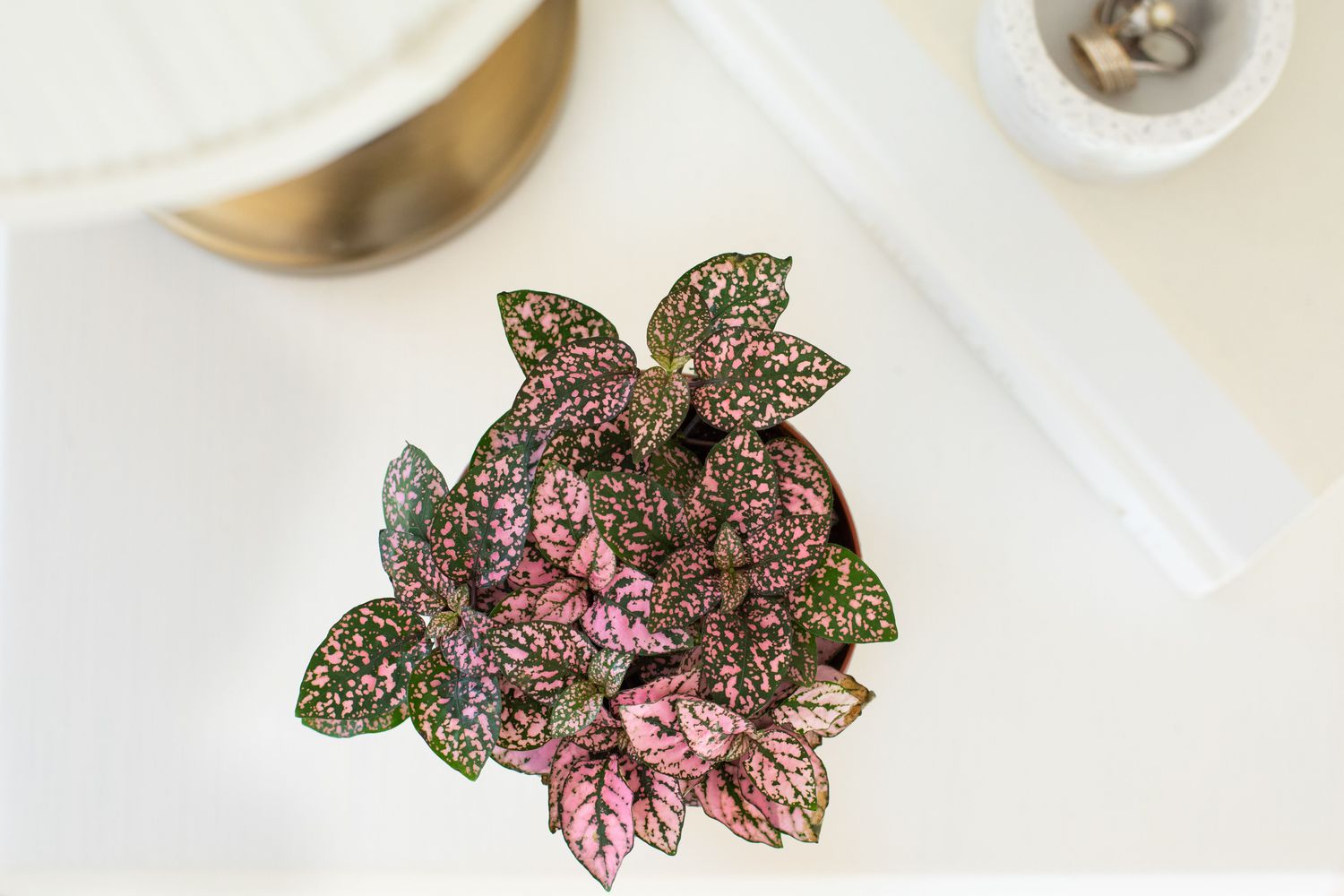
Outdoors, plant polka dot plants in a location that receives some shade. Too much light can cause the plant’s variegation to fade. Bright, indirect light from an east- or south-facing window is ideal indoors.
Soil
Polka dot plants prefer soil rich in organic matter with good drainage. An all-purpose organic potting mix is typically suitable for these plants. Mix in some pumice or perlite to improve soil drainage.
Water
Keep the soil evenly moist. Water the plant when the top half-inch of soil has dried out. Cut back slightly on watering in the winter, then resume watering once you see new growth appear in the spring.
Temperature and Humidity
Keep your polka dot plant in a warm place with at least 50% humidity. They can be a great bathroom plant, if your bathroom has a window. Polka dot plants prefer temperatures over 60°F.
They’re only , hardy outdoors in USDA growing zones 10 and 11. Move container plants outdoors in the spring after any danger of frost has passed, then bring them back indoors well before the first frost.
Fertilizer
When grown as a houseplant, feed polka dot plants an organic fertilizer designed specifically for houseplants once a month during the warm growing season. If you’re growing polka dot plants in-ground outdoors, mix organic compost into the soil before planting.
Is this the right plant for you?
A POLKA DOT PLANT IS A GOOD CHOICE IF:
- You have a bathroom with a window where this plant could thrive
- You’re looking for a houseplant that will add a splash of color to your home
- You want a houseplant that’s easy to propagate, so you can grow your collection
Types of Polka Dot Plants
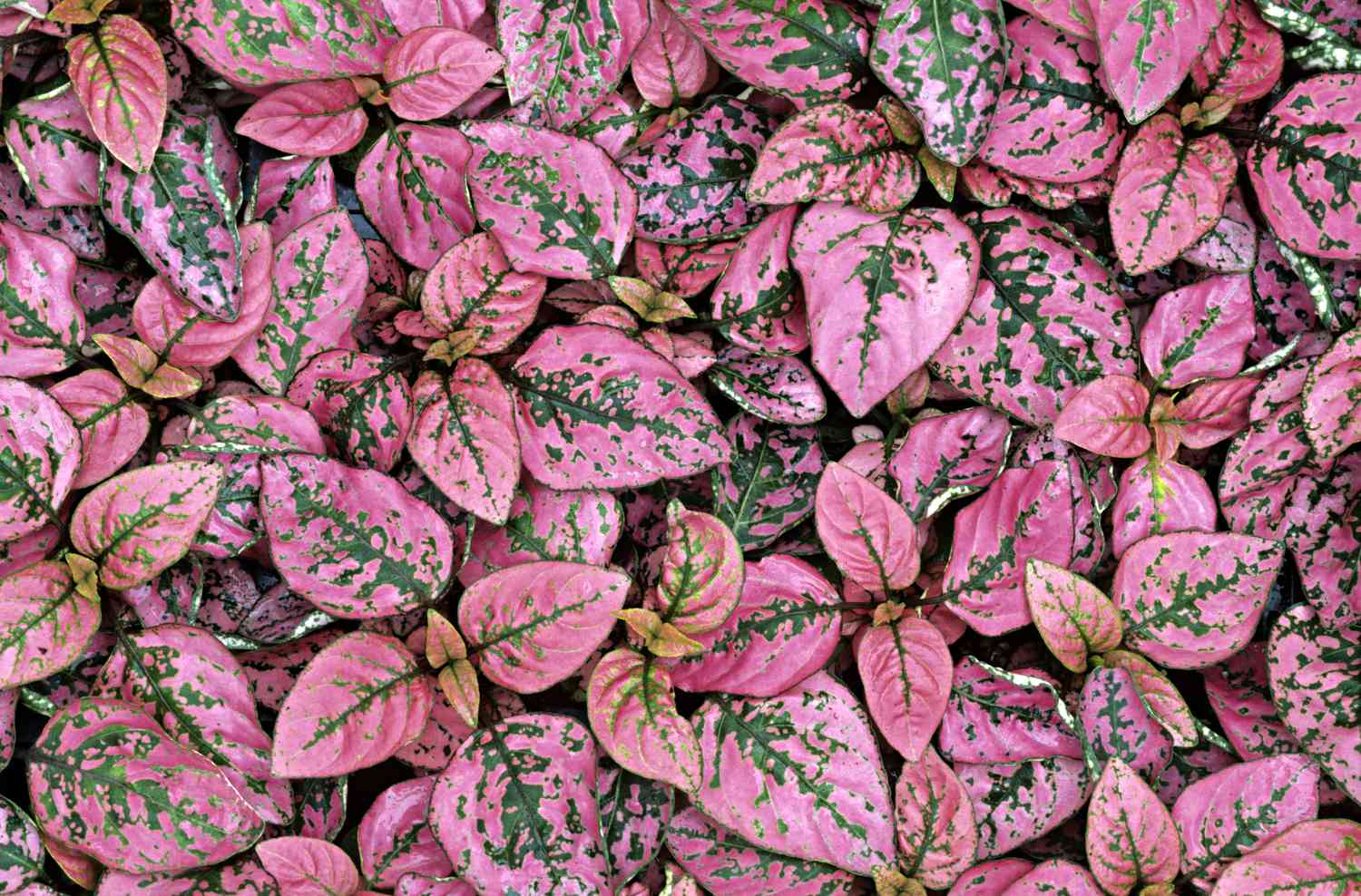
Different varieties of Hypoestes phyllostachya are bred for their leaf coloration, including:
- ‘Carmina’: has dark green and red-spotted leaves
- ‘Confetti’: offers green leaves with spots of white, pink, rose, red, or burgundy
- ‘Pink Brocade’: features green leaves with mottled pink spots
- ‘Splash’ series: boasts leaves in mixes of greens with splotches of pinks, reds, or whites
Credit: David Q. Cavagnaro / Getty Images
Pruning
Cut or pinch back the top two leaves on each stem every week to promote bushier growth and keep your polka dot plant from becoming leggy. When the plant flowers, clip off the flower spike with clean, sharp shears because the plant will enter dormancy after it flowers. Removing the flowers prevents the plant from going into dormancy.
Propagating Polka Dot Plants
You can propagate polka dot plants from stem cuttings. You’ll have the most success in spring or summer. Here’s how to propagate your polka dot plant from a stem cutting rooted in water. You’ll need a small glass or jar and clean, sharp pruners or scissors.
- Cut off a piece of stem. Cut a 2- to 4-inch piece of stem off the plant, and remove the leaves on the lower half of the stem.
- Put cutting in water. Put the cutting in the room temperature water. The section where the lower leaves were removed should be covered.
- Place in indirect light. Put the cutting in a warm place with bright, indirect light. Top off the water regularly to keep the step submerged, and change it often to keep algae from forming.
- Pot the cutting. When roots are about two inches long (usually within a few weeks to a few months), the cutting is ready to pot up in soil.
Tips for Buying in Store
- Read the plant label. Different plants have different humidity and light requirements so you’ll want to be sure it’s a good fit for your home.
- Inspect the leaves. Assess them to ensure they look healthy, and see if there are new leaves about to unfurl (this means the plant is happy!).
- Check for pests. Discoloration on the leaves, visible insects on the plant, and eggs or larvae in the soil can indicate and infestation.
How to Grow Polka Dot Plant From Seed
Sow seeds on the surface of warm, moist soil in early spring. Place the plant in a sunny location. The seeds should sprout in a few days. Once the seedling has grown several inches—usually in a couple of weeks—it is ready to transplant into a larger container or plant outdoors. Only plant outdoors after the threat of frost is over.
Potting and Repotting Polka Dot Plant
The best time to repot a polka dot plant is in the spring after its winter dormant period. Your polka dot plant is pot bound when the roots start growing out of the drainage holes in its container. The new pot should be no more than two inches wider and deeper than the old pot. Avoid terra cotta pots, which wick away moisture and can cause the soil to dry out too quickly.
Overwintering
Bring outdoor container plants indoors before night temperatures drop below 60 degrees Fahrenheit in late summer or early fall. You can bring them outdoors again the following spring when night temperatures are consistently above 60 degrees.
Common Pests and Plant Diseases
Pests like mealybugs, aphids, and whiteflies can affect polka dot plants. Typical diseases associated with polka dot plants are root rot, leaf-spot diseases, and powdery mildew. Telltale signs of infestations or disease include discolored or damaged foliage and insects crawling or feeding on leaves and stems.
| Pest | What to Look For | How to Treat |
| Mealybugs | Small, white, oval-shaped insects and powdery wax substances on stems | Spray with water, insecticidal soap, or neem oil |
| Aphids | Small, pear-shaped insect in green, yellow, red, or black | Spray with insecticidal soap or neem oil |
| Whiteflies | Small moth-like insects and white, cone-shaped eggs | Spray with water or insecticidal soap, use sticky traps |
How to Get Polka Dot Plant to Bloom
Unlike most flowering plants, gardeners typically want to prevent polka dot plant from blooming because flowering causes the plant to go dormant. If you want your plant to last longer, it’s best to clip off the flower spike when it forms.
Bloom Months
Polka dot plants typically bloom in late summer or early fall as days begin to shorten.
What Do Polka Dot Plant Flowers Look and Smell Like?
Polka dot plants bloom by sending up a small spike with tiny pink or purple flowers. They’re not showy or aromatic.
Common Problems With Polka Dot Plants
Leaves Losing Their Color
Fading leaf color is typically caused by too much or too little sun. Polka dot plants need bright, indirect light to maintain their color, but hot, direct sun can cause variegation to fade.
Leaves Turning Brown or Drooping
Insufficient water and humidity can cause the polka dot plant’s leaves to turn brown or start drooping. Also, too much sunlight can burn the leaves. Hard water and overfertilization are other reasons for a polka dot plant’s leaves turning brown. Adjust your humidity or watering habits to revive the plant.
Leaves Turning Yellow or Dropping Off
Overwatering can cause leaves to yellow and even drop. If you notice yellowing, reduce the amount of water you give the plant and make sure you’re using potting soil with good drainage.
-
Is polka dot plant indoor or outdoor?
Polka dot plants can be grown indoors, and outdoors in the right climates. If you live in USDA Hardiness Zones 10 through 11, you can grow polka dot plant outdoors.
-
Where should I put my polka dot plant?
Polka dot plants will grow best in a warm, humid place with bright, indirect light or dappled sunlight.
-
Do polka dot plants spread?
Polka dot plants do not spread very much. Polka dot plants usually grow to 16 to 22 inches tall and 18 to 24 inches wide.
-
How often do polka dot plants flower?
Polka dot plants don’t always flower, but when they do, it’s in the summer months. Their flowers are small and typically lilac or pink in color.