



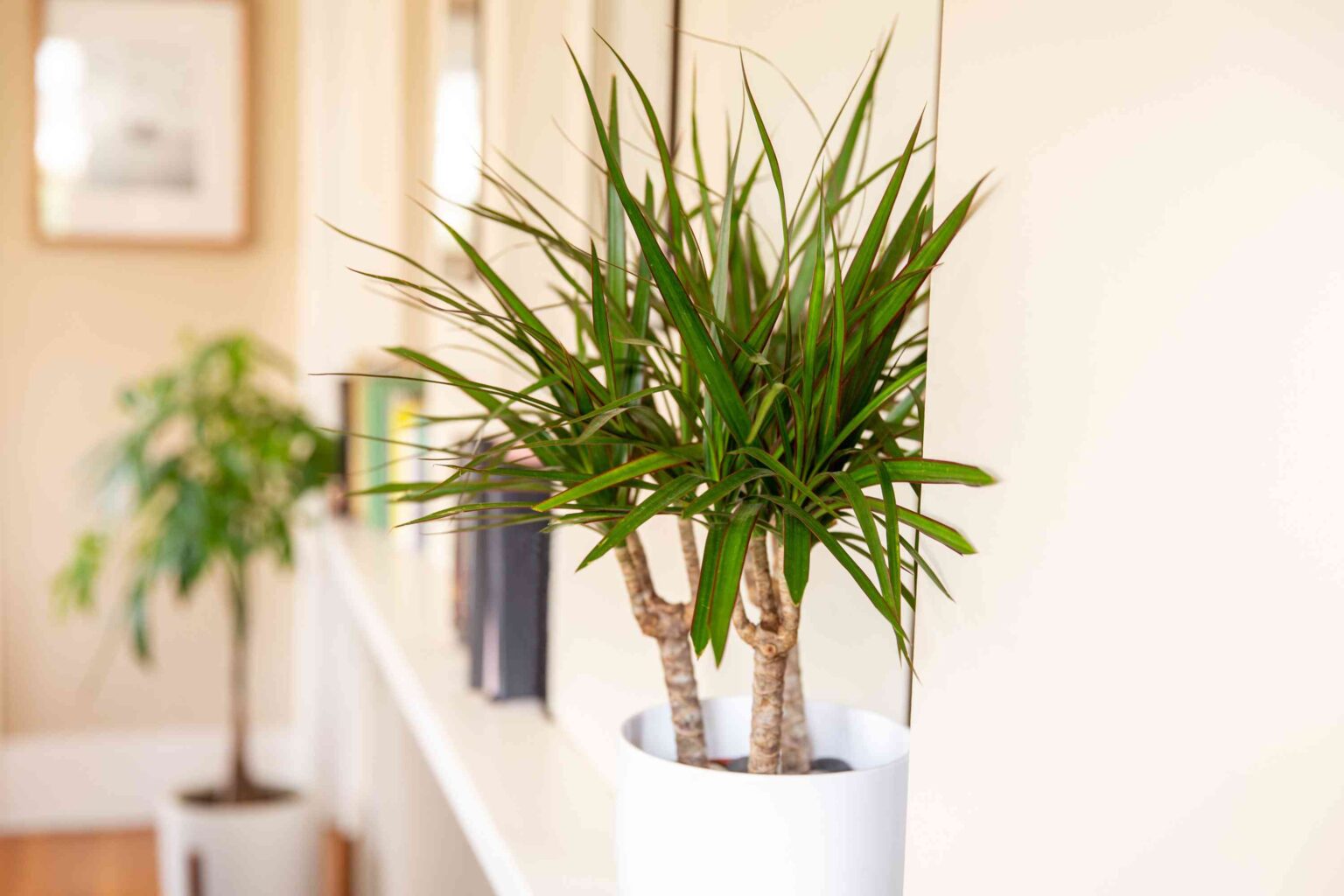
The Dracaena genus of tropical broadleaf evergreen shrubs and trees includes several species commonly used as houseplants throughout the world. There are many types of dracaena houseplants to choose from, most of them have spear- or grass-shaped leaves that extend off one or more thickened, cane-like main stems. Dracaena are easy to grow. While they thrive in bright, indirect light, they even qualify as low-light houseplants.
The plant is primarily grown for its attractive foliage, which is often variegated and comes in a rainbow of colors. In their native tropical environments, some dracaena plants grow up to 20 feet tall or more, but as indoor houseplants, most remain under 8 feet tall.
The plants in the Dracaena genus contain saponins that are toxic to dogs and cats.
| Common Name | Dracaena; various species have different common names |
| Botanical Name | Dracaena spp. |
| Family | Asparagaceae |
| Plant Type | Shrub |
| Mature Size | 2-10 ft. tall, 1-2 ft. wide |
| Sun Exposure | Partial |
| Soil Type | Moist, well-drained |
| Soil pH | Acidic |
| Hardiness Zones | 10–12 (USDA) |
| Native Area | Asia, Africa, Australia |
| Toxicity | Toxic to dogs and cats |
Dracaena Care
Here are the main care requirements for growing a dracaena:
- Select a location in bright, indirect light indoors or dappled sun outdoors.
- Plant it in well-draining, slightly acidic potting mix or garden soil.
- Water it regularly in spring and summer and reduce watering in winter.
- Increase humidity levels for houseplants in the winter if needed.
- Fertilize monthly with a water-soluble houseplant fertilizer.
Light
Place dracaena in a spot with bright indirect light. While the plant tolerates short periods of direct sunlight, long exposures will cause leaf scorch. Indoors, it also tolerates low-light conditions although it will grow better with more exposure to indirect light.
Outdoors, it needs a location in partial shade or dappled sun.
Soil
For potted dracaena plants, use any peat-based commercial potting mix, which has the slight acidity that these plants prefer.
If grown in the landscape in tropical regions, the soil should be rich and well-drained.
Water
Keep dracaena consistently moist during their growing season (spring through fall), but allow them to go drier in the dormant winter period. Water them thoroughly each week during the active growing season, letting excess water go out of the drainage hole. In winter, water moderately every two weeks.
Temperature and Humidity
Most dracaena species thrive at temperatures of 70°F to 80°F but will react badly if temperatures drop below 50°F. These tropical plants like a fairly high humidity level, which is often a problem for indoor plants during the dry winter months. Use a room humidifier if the air in your home is particularly dry.
Fertilizer
During spring and summer, give dracaena houseplants a monthly feeding with a water-soluble fertilizer formulated for houseplants. Do not fertilize in fall and winter when plant growth slows down.
Dusting Tip
Dracaena’s many narrow leaves are dust magnets, but the sheer number of leaves makes it hard to dust them individually. Use a detachable shower head to spray the plant clean.
Dracaena Placement
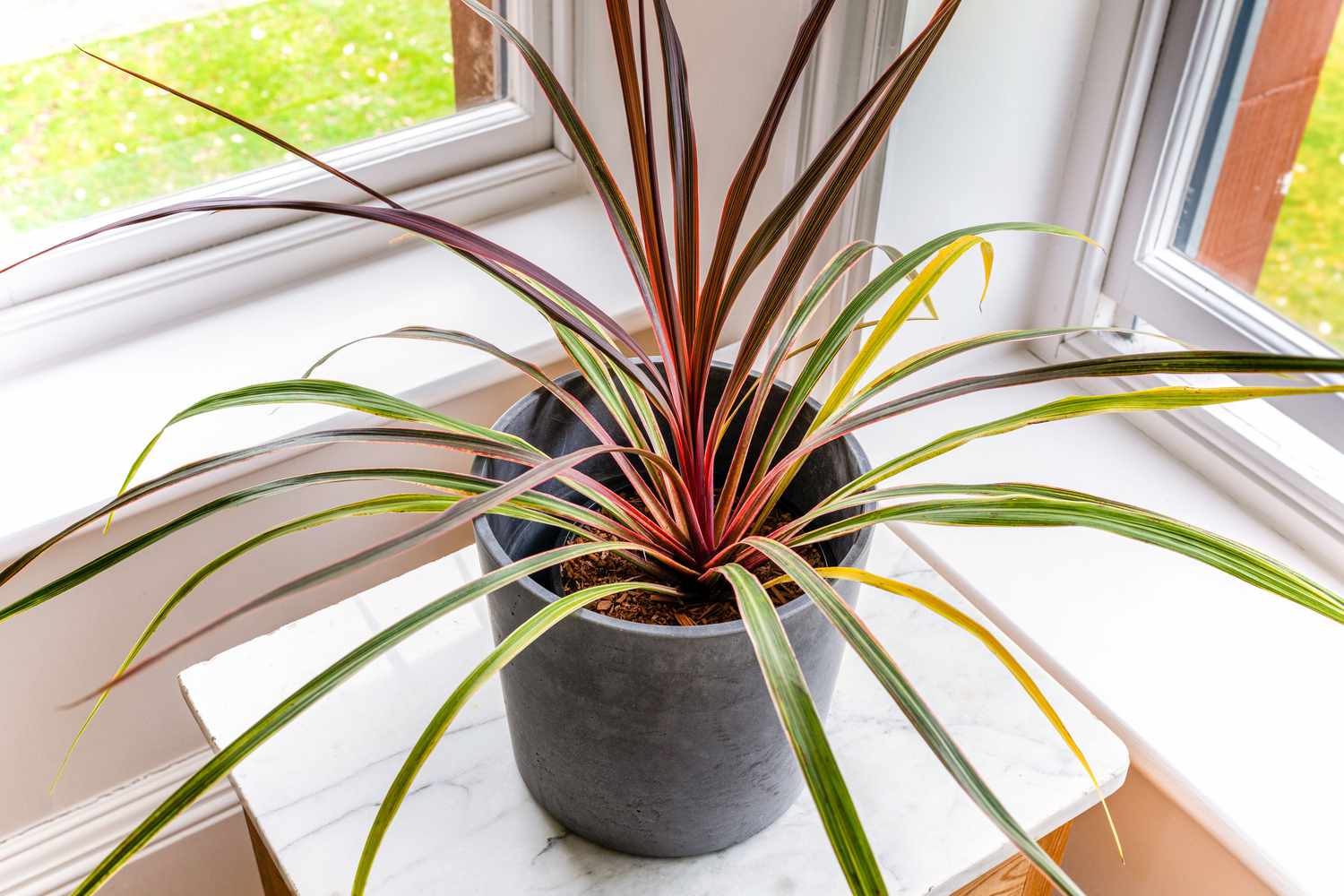
Place dracaenas in a north- or east-facing window, or near a south- or west-facing window. Dracaenas do better with bright, indirect light, so if you want to put it in a south- or west-facing window, you should set it a few feet back from the window or pull a sheer curtain between the plant and the sun’s direct rays.
Types of Dracaena
Out of the 100-plus species in the Dracaena genus, a relatively small number are commonly sold as houseplants. Popular varieties include:
- Corn plant (Dracaena fragrans) has strap-like leaves that emerge in a fountain-like cluster from a thick woody stem. This plant grows up to 6 feet in height as a potted plant. In its native habitat, it has been known to grow over 20 feet.
- Drago (Dracaena draco) is a slow-growing dracaena. Its sword-like green foliage might not be as striking as that of other dracaena but its toughness as a houseplant is unmatched.
- Dracaena deremensis is a synonym for dracaena in the Deremensis Group, a subgroup of D. fragrans with many excellent cultivars, including the ‘Janet Craig’ and ‘Lemon Lime’.
- Dragon tree (Dracaena marginata) has thinner, grass-like leaves that fountain off of multiple thick stems.
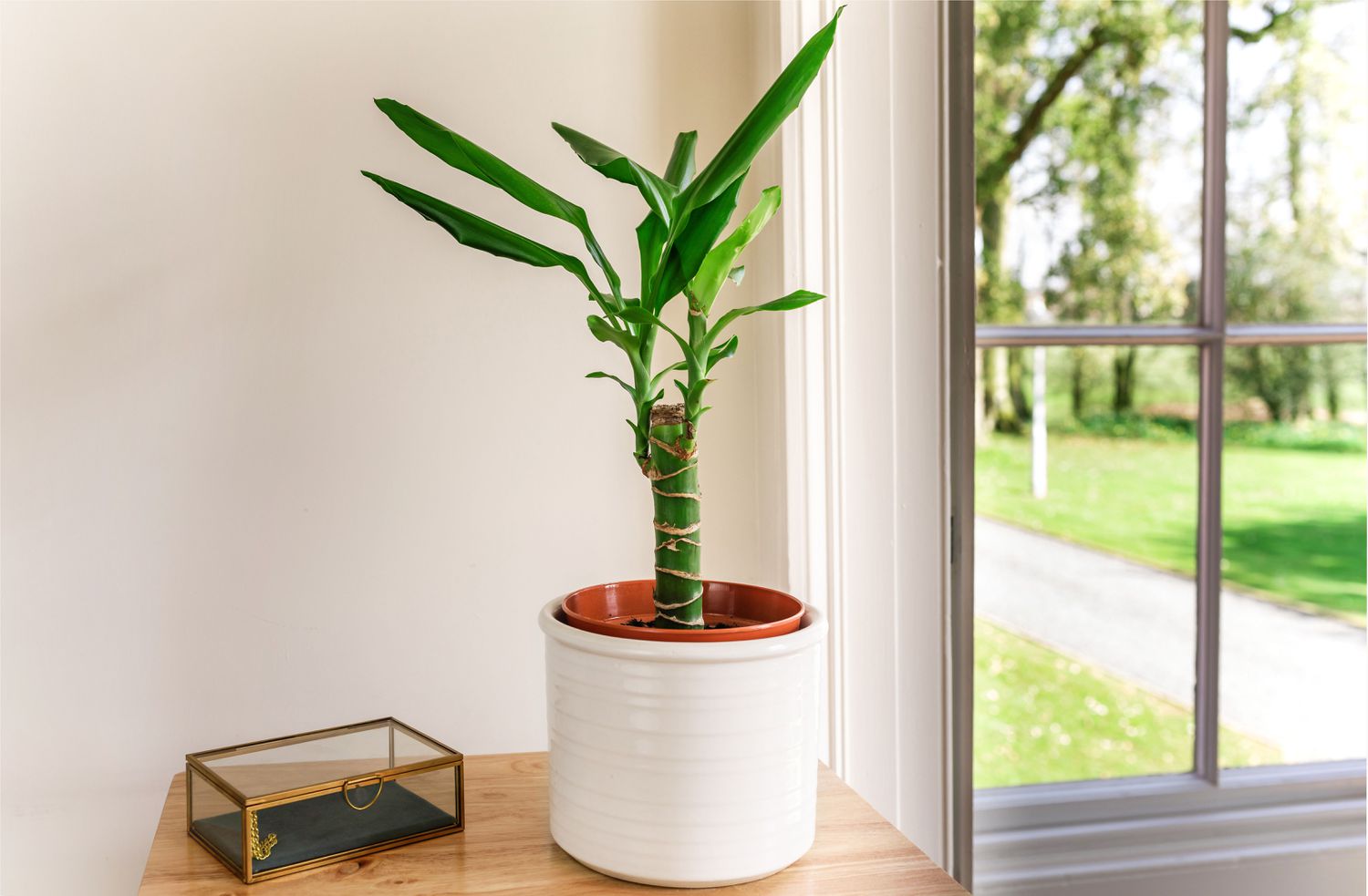
- Lucky bamboo (Dracaena sanderiana), also known as the ribbon dracaena, is often trained to have curled stems by careful manipulation of the direction of sunlight. ‘Variegata’ is a variety with striking yellow and green foliage.
- Florida Beauty is a Dracaena surculosa cultivar with slender, upright, bamboo-like branches and lance-shaped dark green leaves densely peppered with striking spots of variegation.
- Song of India (Dracaena reflexa) has alternating dark green and chartreuse stripes on narrow, lanceolate leaves with veining.
How Do You Know What Type of Dracaena You Have?
There are almost two hundred types of dracaena, and they can be hard to tell apart. (The exception is the snake plant type of dracaena is fairly easy to identify—those leafy spears rise from the soil.)
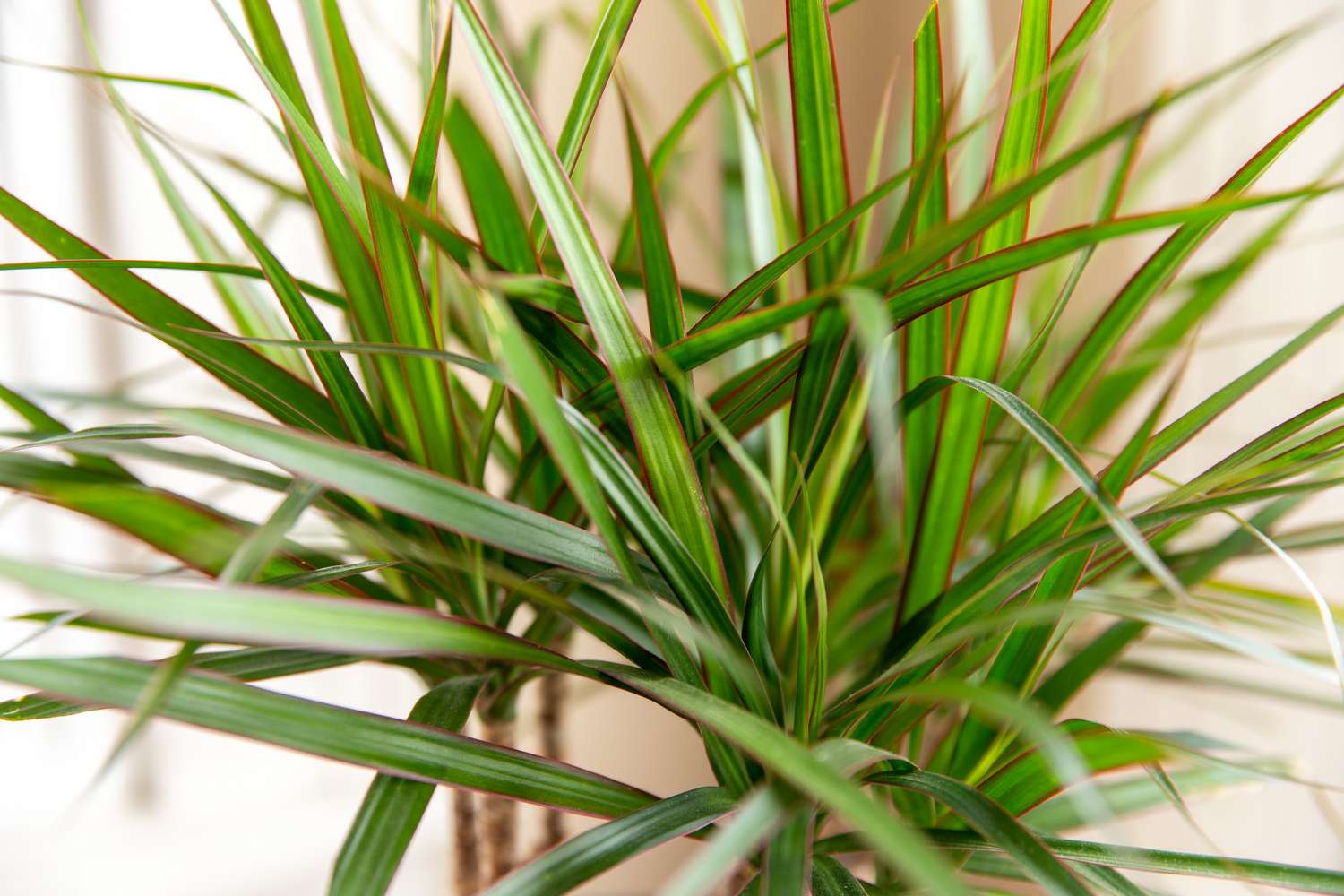
To try to figure out which dracaena you have, look at the leaves. First assess the color: is there any variegation, and if so is it in stripes down the middle or along the edges of the leaves, and what colors are involved? Then look at the leaf growth habit: is it growing straight out, curling down, or curling in a spiral? A quick search with these characteristics should return your answer.
Pruning
Although pruning is not essential, dracaena plants tolerate cutting back when necessary to control their shape or height. Pruning is best done during the active growing periods of spring and summer. Yellowing or dead leaves should be removed as they appear.
Propagating Dracaena
Dracaenas are usually quite easy to propagate by rooting stem cuttings, which is best done in spring as the plant is beginning to actively grow. Even just a bare section of the stem will often produce a new plant.
Here’s how to propagate a new dracaena:
- Take a stem cutting. Cut an 8-inch piece of stem using sharp, clean pruners. Remove the lower leaves.
- Dip in rooting hormone, then plant. Dip the cut end of the stem in rooting hormone powder. Bury the cut end of the plant in a small pot filled with moistened potting soil.
- Keep soil moist in bright, indirect light. Move the planted cutting to a spot that gets bright, indirect light. Water regularly to keep the soil moist. After about three weeks, new leaves should emerge. (You can give the plant a gentle tug to see if the roots have become established.)
- Care for as usual. Care for the new dracaena as you would any other dracaena. Repot it once the roots are growing out of the drainage hole and the plant has become potbound.
Propagate Dracaena in Water
You can also grow a dracaena propagation cutting in water. Remove the lower leaves from the cutting and place the cut end in a container of clear, room temperature water. Let it develop a good root network over the course of several weeks. Change the water regularly. Once the roots are several inches long, move to a pot of soil.
How to Grow Dracaena From Seed
Because indoor dracaena plants rarely flower and produce fruit, it’s not common to propagate them from seeds.
Potting and Repotting Dracaena
Replace the top 2 to 3 inches of potting mix yearly with fresh mix to replenish nutrients. Repot into a slightly larger container when the plant starts to visibly outgrow its pot or when roots start to emerge through the drainage holes.
How to Plant a Dracaena
Choose a terracotta or unglazed ceramic pot, ideally with at least one drainage hole. You want a pot that’s slightly larger than the rootball in diameter, by about an inch or so on each side.
Cover any drainage holes with rocks (one rock per hole) then put down a one-inch layer of potting soil (any soil formulated for houseplants should work). Place the plant in the pot, and fill in with soil until the roots are covered. Water deeply.
Where to Plant Dracaena Outside
In USDA zones 10 through 11, you can plant dracaena in the landscape. The plants will grow much larger than houseplants so make sure the species of your choice fits the location as it grows into a mature plant, often a sizable tree.
Select a location with partial shade, ideally dappled sun cast by other plantings. If the plant receives direct sun, morning sun is preferable to the hot and harsh afternoon sun. The soil in the planting location needs to be well-draining and slightly acidic, with a pH between 6.0 and 6.5.
Common Pests & Plant Diseases
Dracaena is susceptible to some of the same pests that affect many houseplants, especially thrips and mealybugs. The plant also attracts aphids and spider mites.
Fungal leaf spot disease is sometimes be a problem if the soil is overly moist.
Common Problems With Dracaena
Problems with a dracaena plant often manifest themselves through the leaves.
Browning Leaves
Dracaena is sensitive to fluorides and built-up salts, which can cause leaves to turn brown. If you notice this, try watering with non-fluoridated water, with an especially deep watering once each month to flush out salts. Browning leaves can also occur if indoor humidity levels are too low; use a room humidifier to rectify this.
Scorched Leaves
Too much direct sunlight can scorch the leaves of your plant. Move the plant to a spot where is it less exposed to direct sunlight. If the only available location is a south-facing windowsill, use a sheer curtain to filter the light.
Yellowed Leaves
When the leaves of a dracaena turn yellow, the likely culprit is overwatering. Cut down on the amount of water you give your plant. If the soil is compacted and drains poorly, repot the plant with fresh potting soil.
However, it’s also normal for older leaves to turn yellow and fall off. If it’s the oldest leaves falling off, the plant is still growing new leaves, and you’re not overwatering, then you can rest easy knowing there’s nothing wrong with your plant.
Wilted Leaves
Droopy, wilted leaves aren’t necessarily a sign that your plant needs water. While wilting is often a telltale sign that the plant is lacking moisture, there are other possible causes, such as sudden changes in temperature, improper lighting, lack of humidity, or fungal disease.
-
Is dracaena a good indoor plant?
Dracaena is a good indoor plant because it is easy to care for, low maintenance, adaptable to low light, and has lots of beautiful varieties. Its main drawback is that it is toxic to pets.
-
Do dracaena like full sun or shade?
Indoors, dracaena needs bright, indirect light, which means no direct full sun but also no total shade. Outdoors, dappled sun is ideal.
-
Can I put my dracaena outside in the summer?
It is possible to put a dracaena outside in the summer as long as you shelter it from strong, harsh sunlight and keep it in partial sun; it will also need more water. Bring back indoors when nighttime temperatures drop below 55°F.
-
What are the benefits of dracaena plants?
Dracaena potentially makes a minor contribution to indoor air quality, but its main benefit consists of it being an easy-care houseplant that brightens up your home with its beautiful foliage.
-
Should I cut the brown tips off my dracaena?
You can cut the brown tips off of your dracaena plant to improve appearance, but leaves can turn brown again if the problem is not addressed. Over- or underwatering can cause leaf tips to turn brown, so try reassessing your plant’s hydrations needs first.
-
How long do dracaena live?
Dracaena can live for decades inside, though it might start to look a little worse for wear after 5 to 10 years, depending on the species. You may want to consider propagating.