



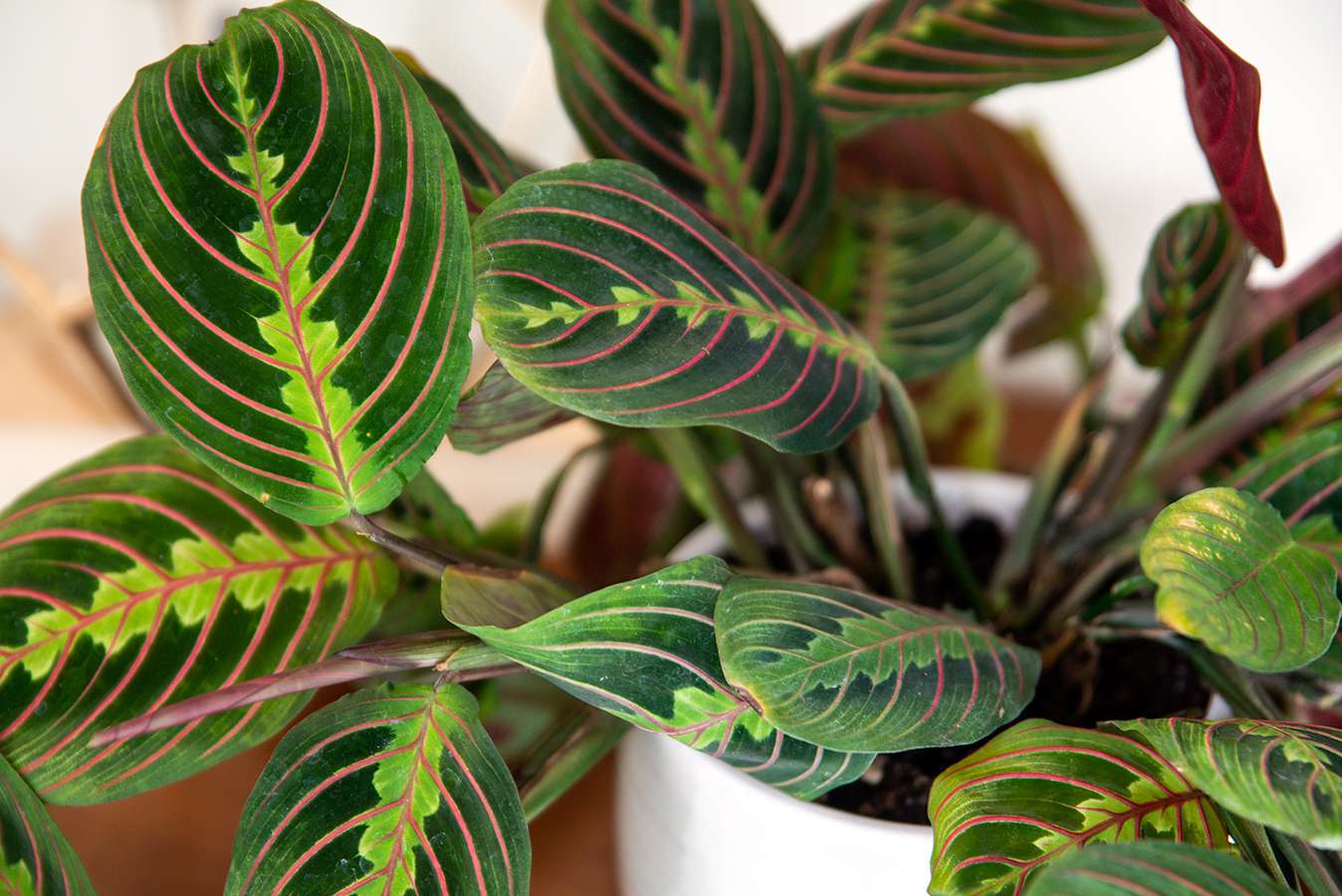
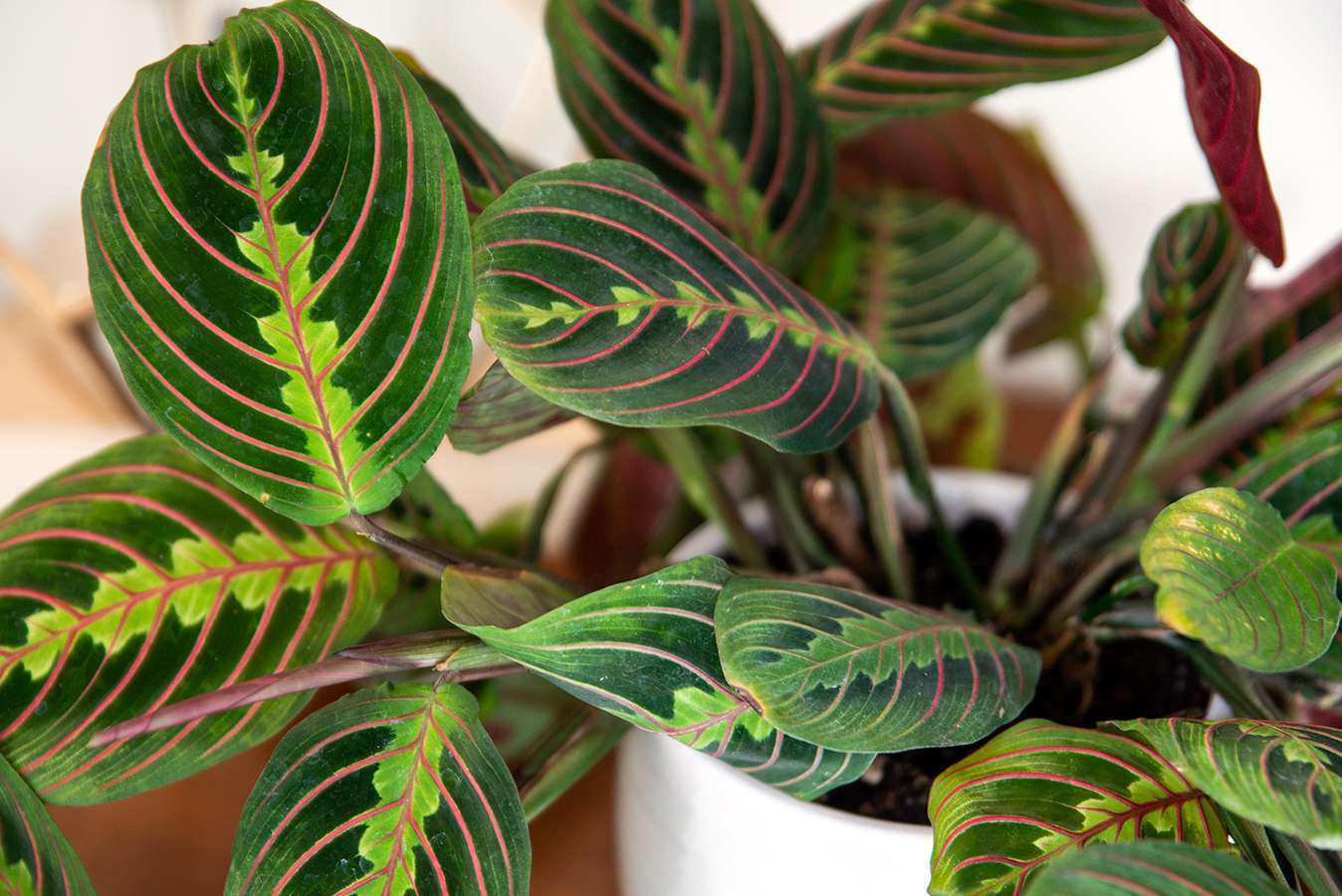
The prayer plant (Maranta leuconeura) is one of the most distinguishable tropical houseplants thanks to its beautiful decorative foliage. It gets its common name from its leaves, which stay flat during the day and then fold up like praying hands at night.
A slow-grower, the prayer plant can eventually reach up to a foot in height indoors. They are popular as houseplants and can be planted and cared for indoors during any time of the year.
Those looking for a pet-safe plant will be happy to hear that prayer plants are considered non-toxic to both pets and humans.
jardineria Profesional / Adrienne Legault
| Common Name | Prayer plant |
| Botanical Name | Maranta leuconeura |
| Family | Marantaceae |
| Plant Type | Herbaceous, perennial |
| Mature Size | 6–12 in. tall, 6–12 in. wide |
| Sun Exposure | Partial, shade |
| Soil Type | Moist but well-drained |
| Soil pH | Neutral, acidic |
| Bloom Time | Spring |
| Flower Color | White |
| Hardiness Zones | 11-12 (USDA) |
| Native Area | South America |
Prayer Plant Care
Prayer plants are low-growing, spreading plants that thrive best in tropical greenhouse-like conditions, including warm, humid airflow; well-draining, nutrient-rich soil; and regular fertilization. Poorly drained soil can cause the plant to die from root rot or collapse.
Likewise, plants that are exposed to too much sun can become washed out and develop brown patches on their leaves.
Light
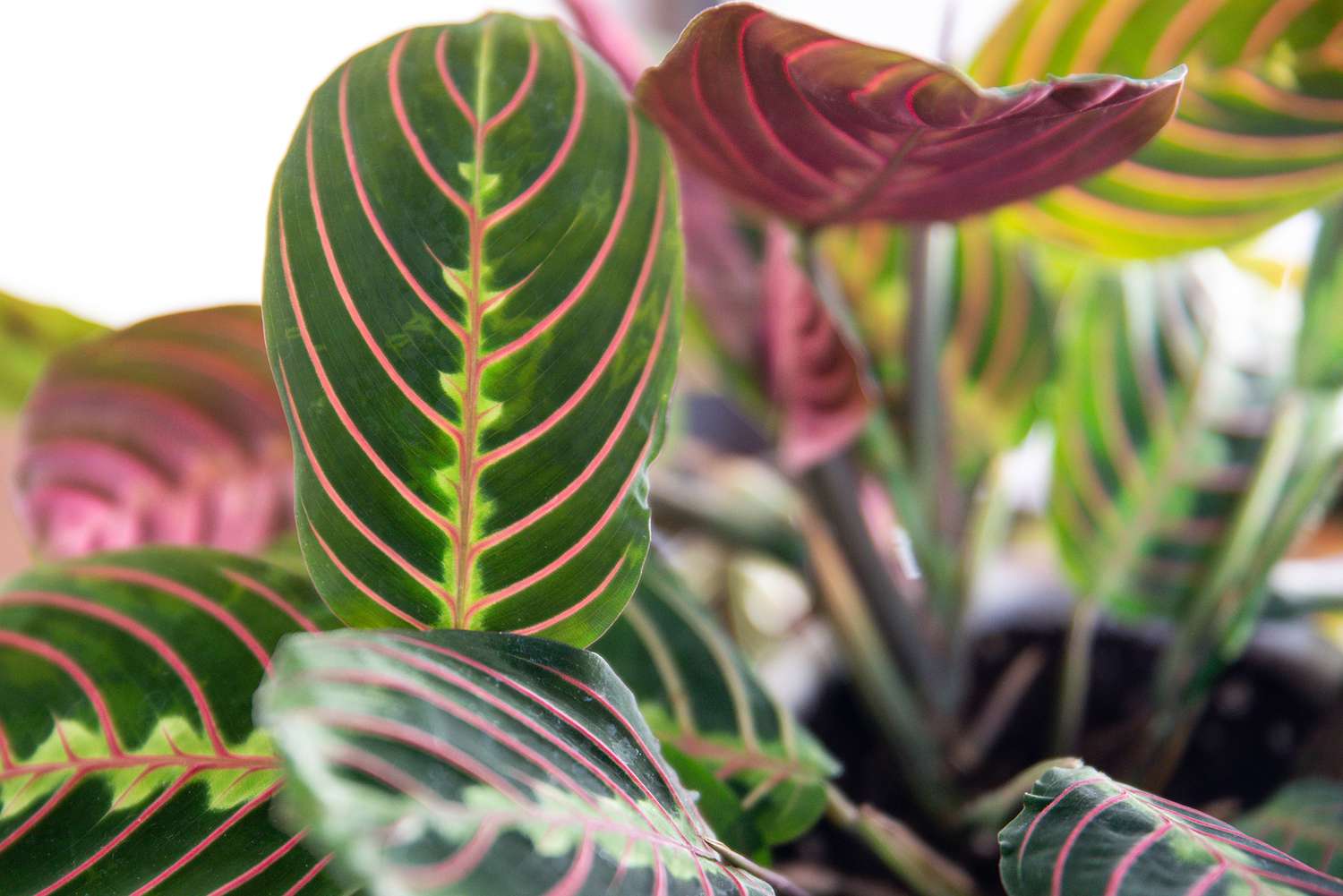
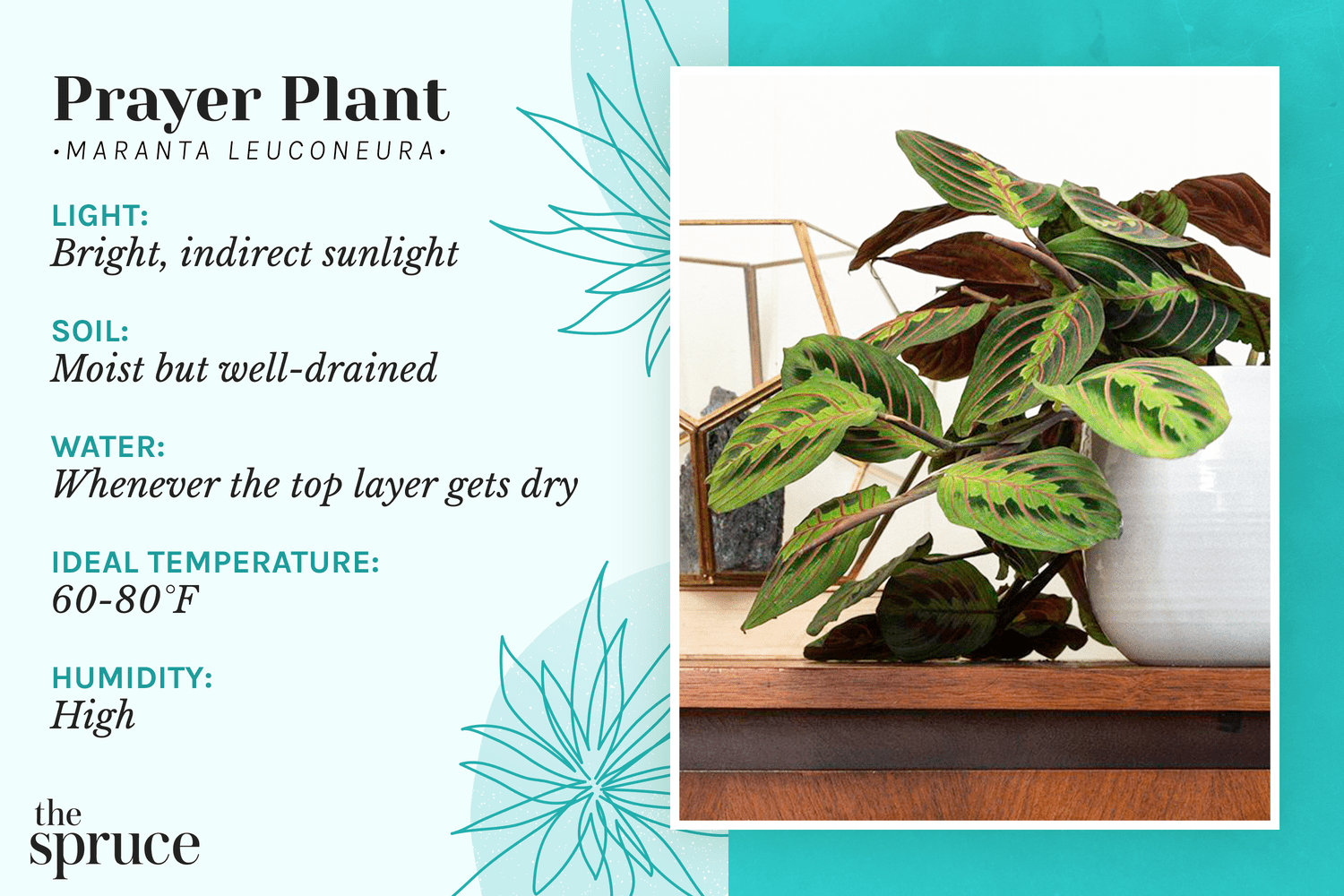
Bright to medium indirect sunlight will allow your prayer plant to thrive. Avoid prolonged exposure to direct sunlight which can burn this plant’s delicate leaves.
Prayer plants generally tolerate low-light areas but may develop leggy growth in very low-light conditions. In the winter when the plants go into dormancy, provide them with bright light to maintain growth.
Soil
Prayer plants require well-draining, loamy, and acidic soil to thrive indoors. Typically, a traditional potting mix works well, but you can also make your own by combining two parts sphagnum peat moss, one part loamy soil, and one part perlite or coarse sand.
Water
Keep the soil of your prayer plant evenly moist, watering once the top layer of soil has dried out. This will likely be once or twice a week during the spring and summer, and once a week during the fall and winter. These sensitive plants prefer filtered or distilled water where possible.
These plants are very susceptible to drought and will not survive long if left unwatered. However, prayer plants are also susceptible to root rot and fungal problems if they are overwatered, so avoid waterlogging the soil and letting water sit on the leaves.
Temperature and Humidity
Prayer plants thrive in humid environments. Normal household temperatures (between 60°F and 80°F) are usually good enough. However, if you notice your plant could benefit from some added humidity, run a small humidifier nearby or place the plant on top of a pebble tray filled with water.
Fertilizer
Fertilize your prayer plant every two weeks from early spring through fall (reducing to once a month in winter) with a water-soluble houseplant fertilizer diluted to half-strength. If you use too little fertilizer, your plant will grow slowly or hardly at all. However, too much fertilizer can burn the plant’s roots.
jardineria Profesional / Amy Sheehan / Adrienne Legault
Types of Prayer Plants
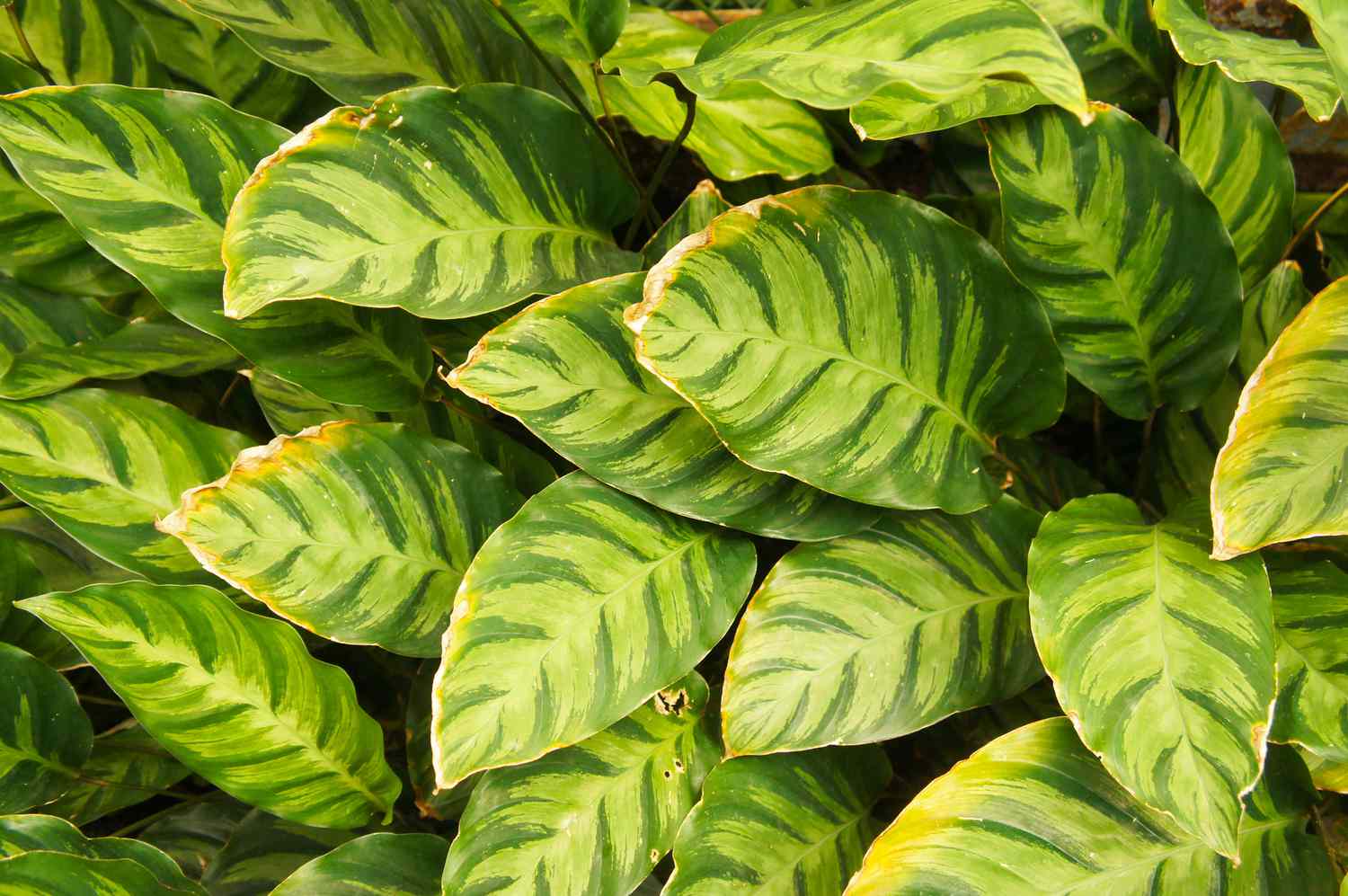
There are many varieties of prayer plants, but the most popular by far is the tricolor variation. Prayer plants and calathea plants are so closely associated with one another that it’s common for them to be mislabeled. Within the Maranta genus, a few species are the most common:
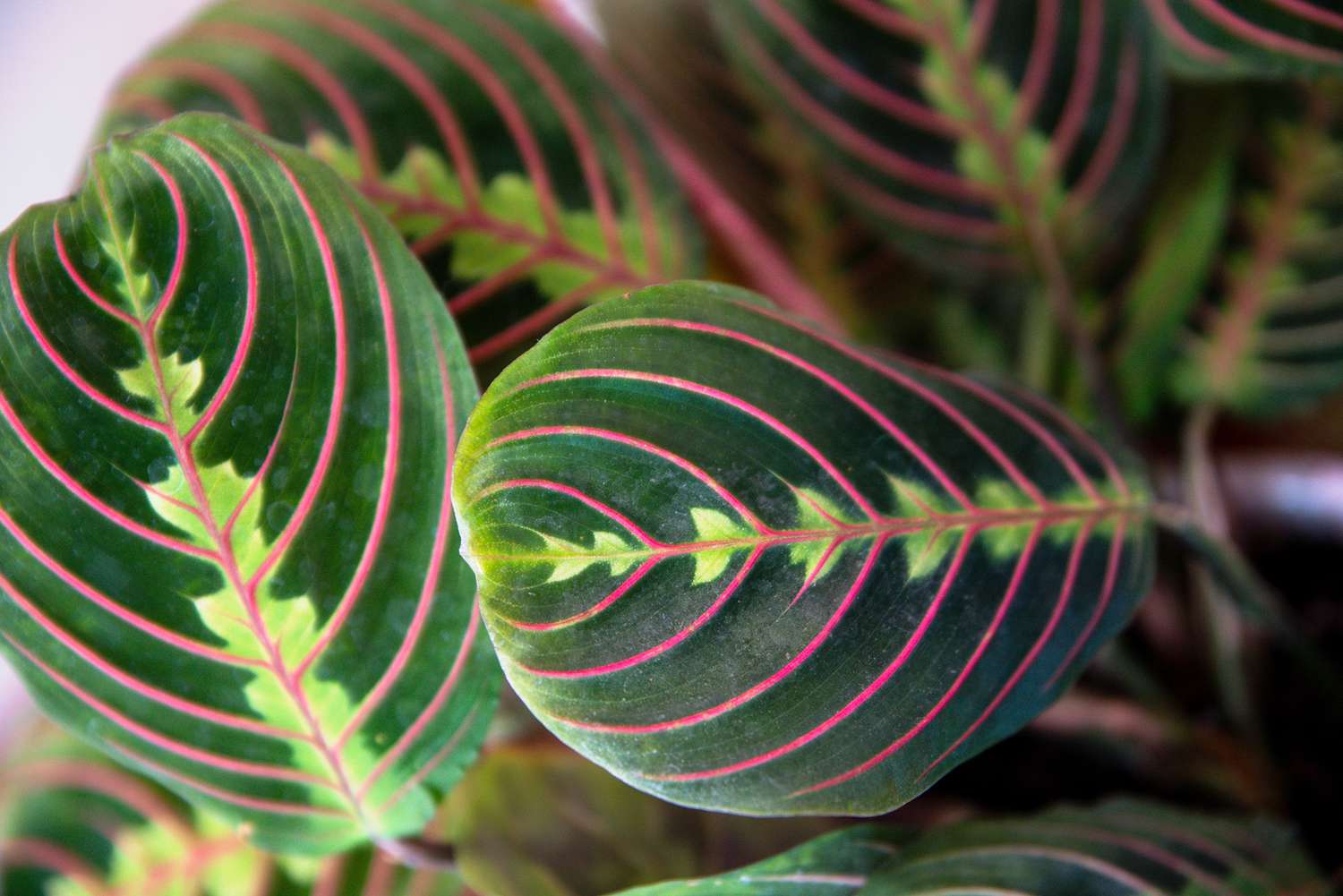
- Red/Tri-Colored Maranta (M. leuconeura var. erythrophylla): This tri-colored prayer plant, also called the herringbone plant, is the most common variety and features bold red veins.
- Rabbit’s Tracks Maranta (M. leuconeura var. kerchoveana): This variety has plain green leaves with two rows of darker splotches.
- Green Maranta (M leuconeura var. erythroneura): This variety looks almost identical to the red/tri-colored maranta, except it has white/lime green veins rather than red veins.
- Black Maranta (M. leuconeura var. massangeana): This variety has a darker leaf background with silvery blotches along the midrib and white leaf veins.

Tips for Buying In-Store
- Check for pests. Look underneath leaves and along the stem to make sure no critters follow you home.
- Avoid plants with brown spots on leaves.
- Read the plant label. Make sure that this plant works for you, your lifestyle, and your space. This one needs a lot of humidity.
Pruning Prayer Plants
Prayer plants do not require regular pruning, however, since they are a low-growing, creeping plant by nature, potted plants can become unruly-looking over time with long stems. Pruning can help to encourage a more bushy appearance. Additionally, pruning is a great way to remove leggy growth or leaves that have turned brown or yellow.
To prune your prayer plant use a pair of sharp, clean pruning shears or scissors and trim off sections of the stem, cutting just above the leaf nodes. While pruning can be done at any time of the year, spring and summer are the best times to prune your plant to encourage new growth.
Propagating Prayer Plants
The easiest and most common way to propagate prayer plants is to divide the plant while repotting. Here’s how:
- Remove your plant from its pot and divide it into several smaller plants by gently shaking the soil off the roots and working them apart. Each new plant should have a good mass of roots and several stems.
- Pot these new smaller plants into shallow pots using a well-draining potting mix.
- Water the freshly planted prayer plants thoroughly, allowing the excess water to drain from the pot.
- Place the plants in a warm, humid location that receives bright to medium indirect light. Ensure the plants stay warm with soil that is evenly moist at all times as the plants become established in their new pots.
Common Pests
Prayer plants aren’t particularly susceptible to pests outside of the usual suspects for houseplants—like spider mites and mealybugs. If you notice any signs of an investigation such as tiny bugs, white powder on leaves, or other signs of damage, treat your prayer plant with neem oil.
Pests to Watch
Signs that probably indicate a spider mite or mealybug issue: tiny bugs on the underside of the leaves, browning leaves, or white powder on the leaves.
Common Problems with Prayer Plants
Prayer plants are generally considered easy to grow, however, since they prefer greenhouse-like conditions and frequent watering, it can be a challenge to get them accustomed to your home at first. As a result, it’s common to run into a few problems including yellow leaves, brown leaves, and dropping leaves.
Yellow Leaves
Yellow leaves on a prayer plant are often a result of improper watering, a lack of sunlight, or too much sunlight. Watering issues can include both overwatering and underwatering. Overwatering can lead to root rot, which will eventually cause the plant to die from dehydration since it no longer has roots to absorb water. Yellow leaves can be an early warning sign that root rot is beginning.
A lack of sunlight will also result in yellow leaves as the plant sacrifices leaves to preserve its energy. Similarly, plants that are exposed to too much sunlight can also develop yellow leaves, although the leaves will usually look more bleached and faded than truly yellow.
Brown Leaves
Brown leaves are another common problem that is usually due to underwatering, a lack of humidity, or a lack of sunlight. Sometimes, plants that are underwatered will develop yellow leaves that will eventually become brown, crispy leaves. Prayer plants that need more light will undergo a similar process. Plants suffering from a lack of humidity will often begin developing brown edges on their leaves, which can be an early warning sign that more humidity is needed.
Dropping Leaves
If your prayer plant begins suddenly dropping its leaves, there can be a few potential culprits. Extreme changes in temperature or humidity, pest infestations, drought, and excessive fertilization are the most common causes. These issues will cause your plant to go into shock and begin dropping its leaves. Closely examining your plant, its growing environment, and any recent changes it has been exposed to will help to determine what’s causing the problem.
Is This the Right Plant for You?
A PRAYER PLANT IS A GOOD CHOICE IF:
- you want a beautiful houseplant that has just the right amount of color
- you are a pet parent and want a houseplant safe for them
- you won’t forget to water once a week
- you have a spot that gets bright to medium indirect sunlight
-
Do prayer plants need sun?
Prayer plants need bright indirect light, and can take a few hours of direct light a day as well. Your prayer plant can burn if placed in direct sunlight.
-
How do you tell if a prayer plant is happy?
Your prayer plant is happy if the leaves are lush, verdant, and free of crispy edges. Dry, wilted leaves are a sign your plant needs more water.
-
Are prayer plants easy to grow?
Prayer plants are fairly easy to grow if the conditions are right. They should be watered on a consistent basis to prevent crispy leaves. Prayer plants are susceptible to spider mites, so if your plant looks unhappy but you don’t know why, check the undersides of the leaves for tiny insects and webbing.
-
Can prayer plants bloom?
Yes, prayer plants can bloom when grown indoors under the right conditions. Mature and happy prayer plants will display delicate white and light pinkish-purple flowers in the spring and summer. Take this as a great sign that your plant is happy with its growing conditions!