



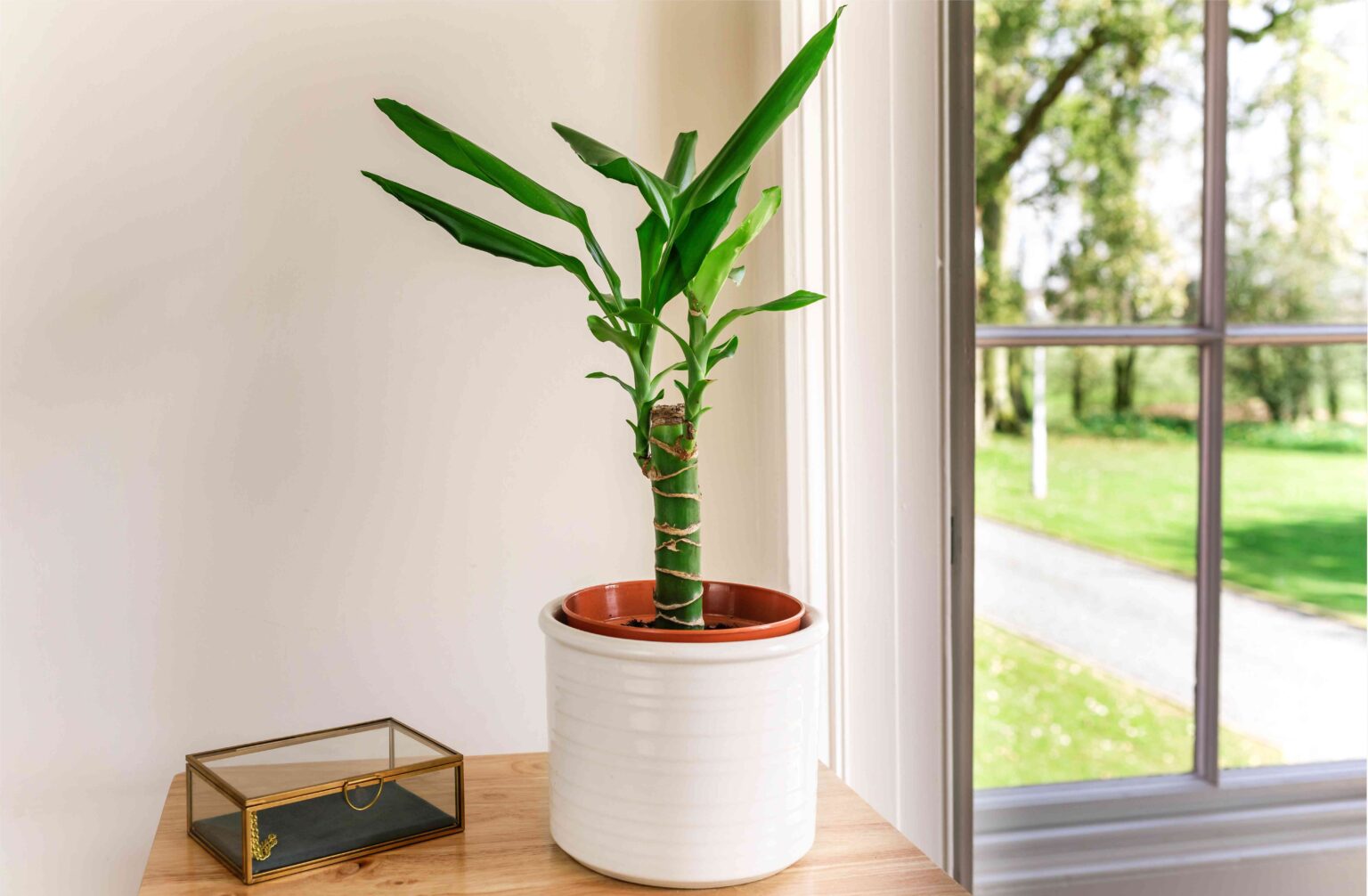
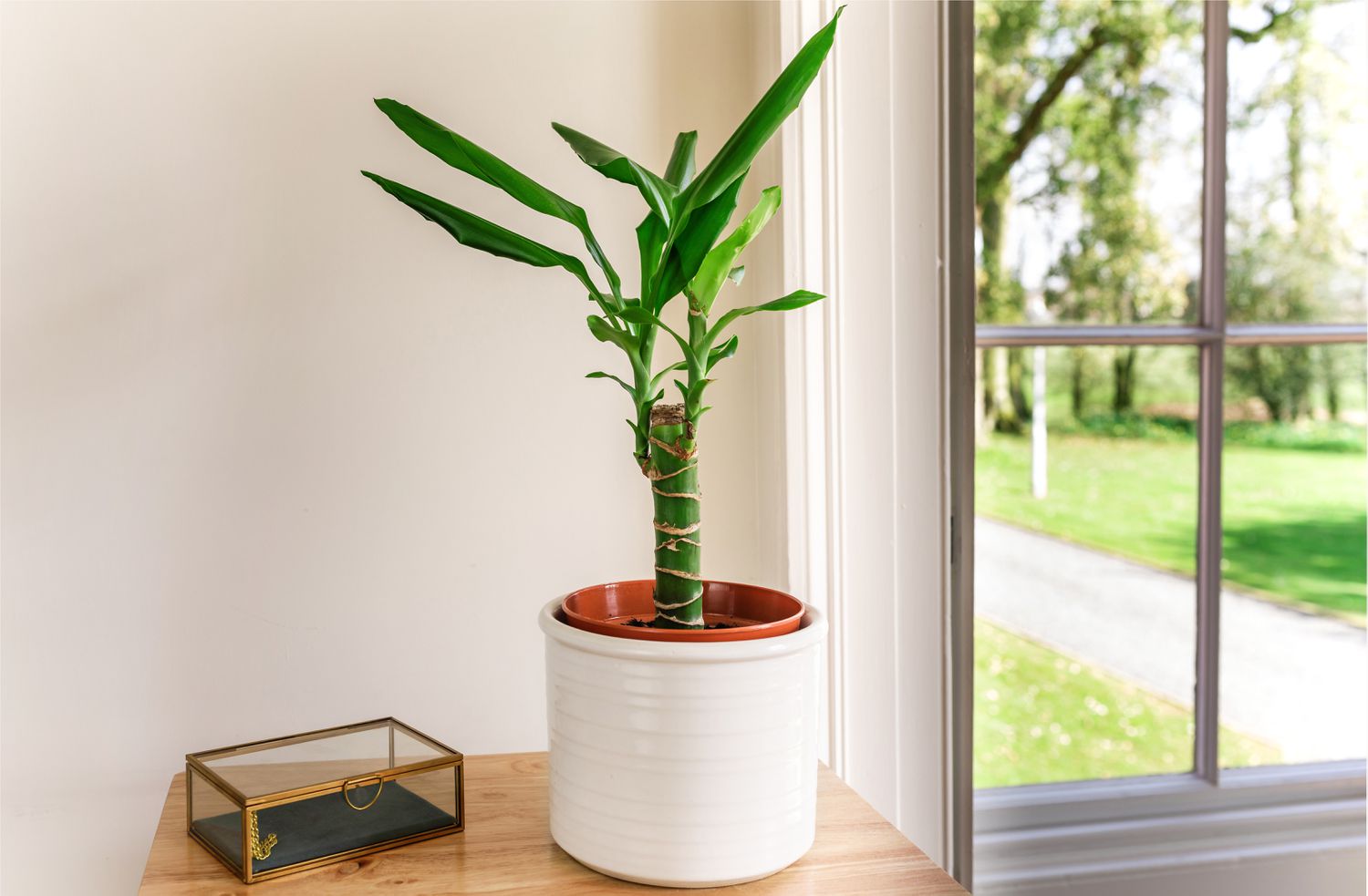
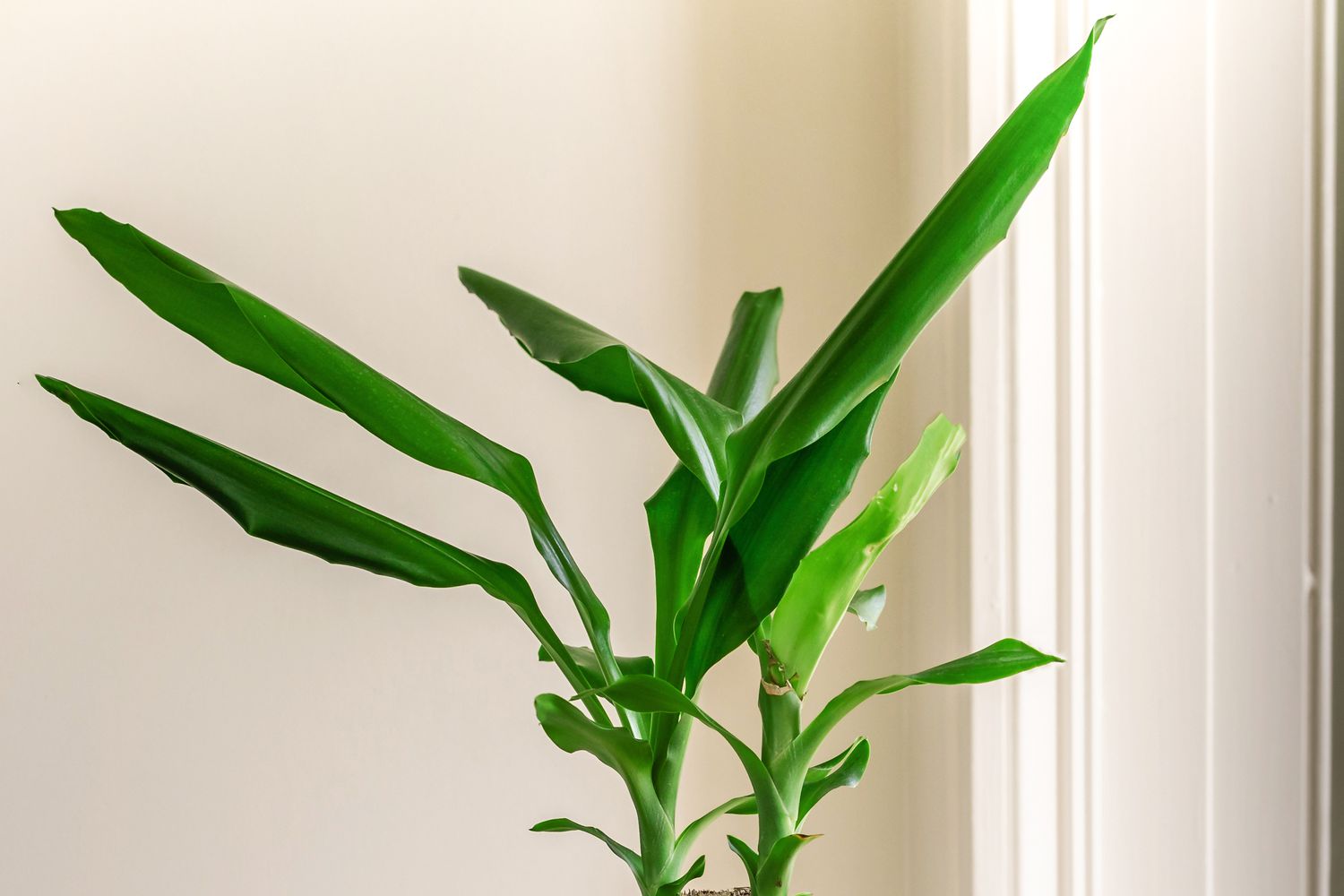
The corn plant (Dracaena fragrans) is a tropical African evergreen tree that grows fairly slowly from thick canes or stems that produce long, narrow leaves like stalks of corn.
Corn plants make great houseplants if you want to maximize vertical space—they grow to be quite tall and narrow, typically only reaching around four to six feet tall in containers. If you have cats or dogs, it’s best not to keep a corn plant in your home since it’s toxic to both.
These plants, like the others in the dracaena genus, aren’t high maintenance once you get their growing conditions right. Here’s how you can help your corn plant thrive.
jardineria Profesional / Cara Cormack
| Common Names | Corn plant, dracaena, false palm |
| Botanical Name | Dracaena fragrans |
| Family | Asparagaceae |
| Plant Type | Broadleaf, evergreen, shrub/tree |
| Mature Size | 15–50 ft. tall, 3–10 ft. wide outdoors; indoor plants can grow up to 6 ft. tall |
| Sun Exposure | Partial |
| Soil Type | Moist, well-draining, loamy |
| Soil pH | 6.1 to 6.5 (Acidic) |
| Bloom Time | Late fall and then again in late spring; nighttime bloomer |
| Flower Color | White, yellow |
| Hardiness Zones | 10–12 (USDA) |
| Native Area | Africa (tropics) |
| Toxicity | Toxic to dogs and cats |
Corn Plant Care
Corn plants are usually grown as large potted plants indoors since they are tropical plants that require climate-controlled conditions. You can put corn plants outdoors during the summer if they are in a sheltered, somewhat shady location. Bring them indoors once the temperatures start to fall into the 60°F range.
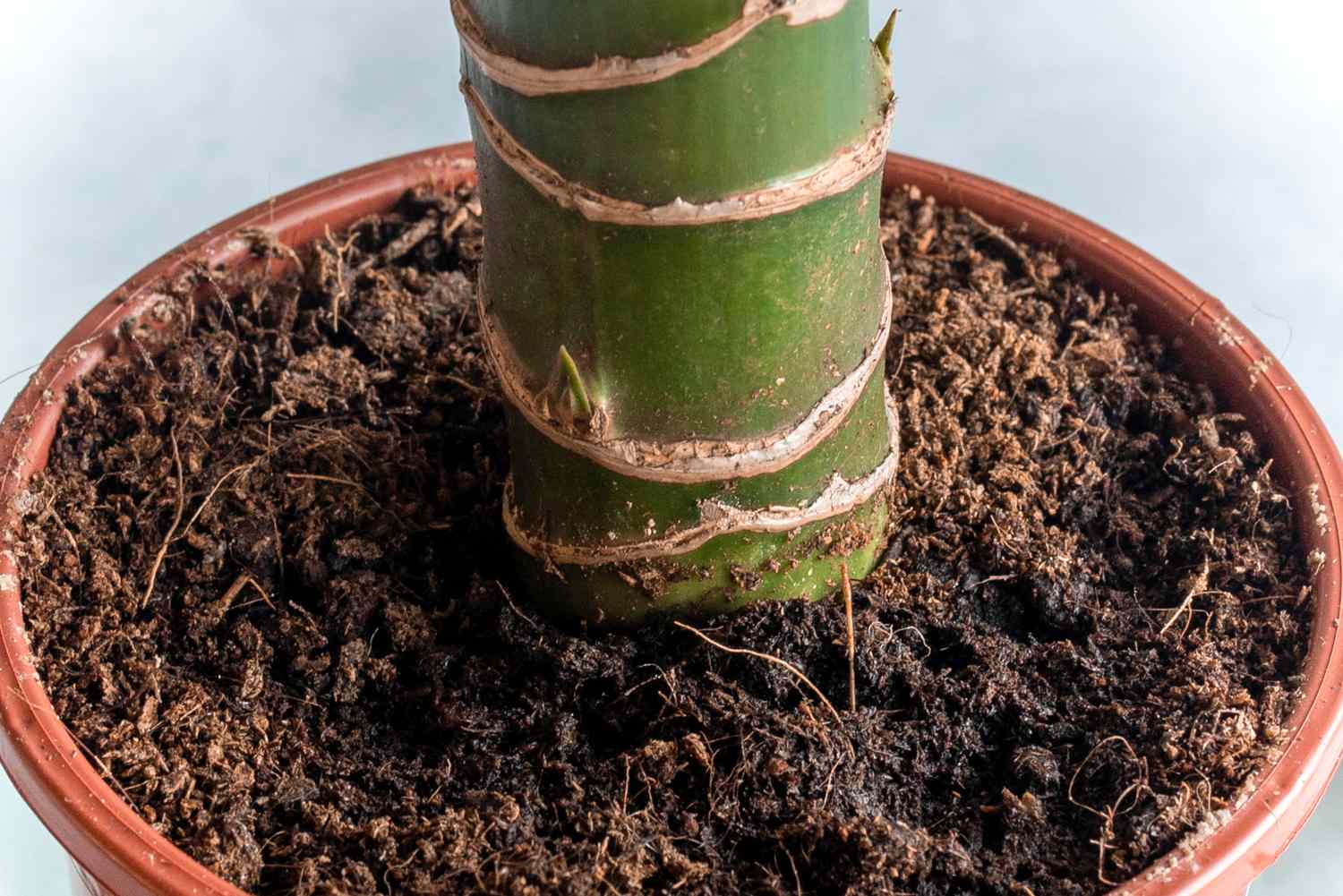
- Plant corn plants in a well-draining, rich potting mix.
- Place corn plant in bright, indirect light; avoid direct sunlight.
- Protect corn plants from drafts and heat by moving them away from cold or drafty windows, air conditioners, and heating vents. A humid environment is preferred.
Light
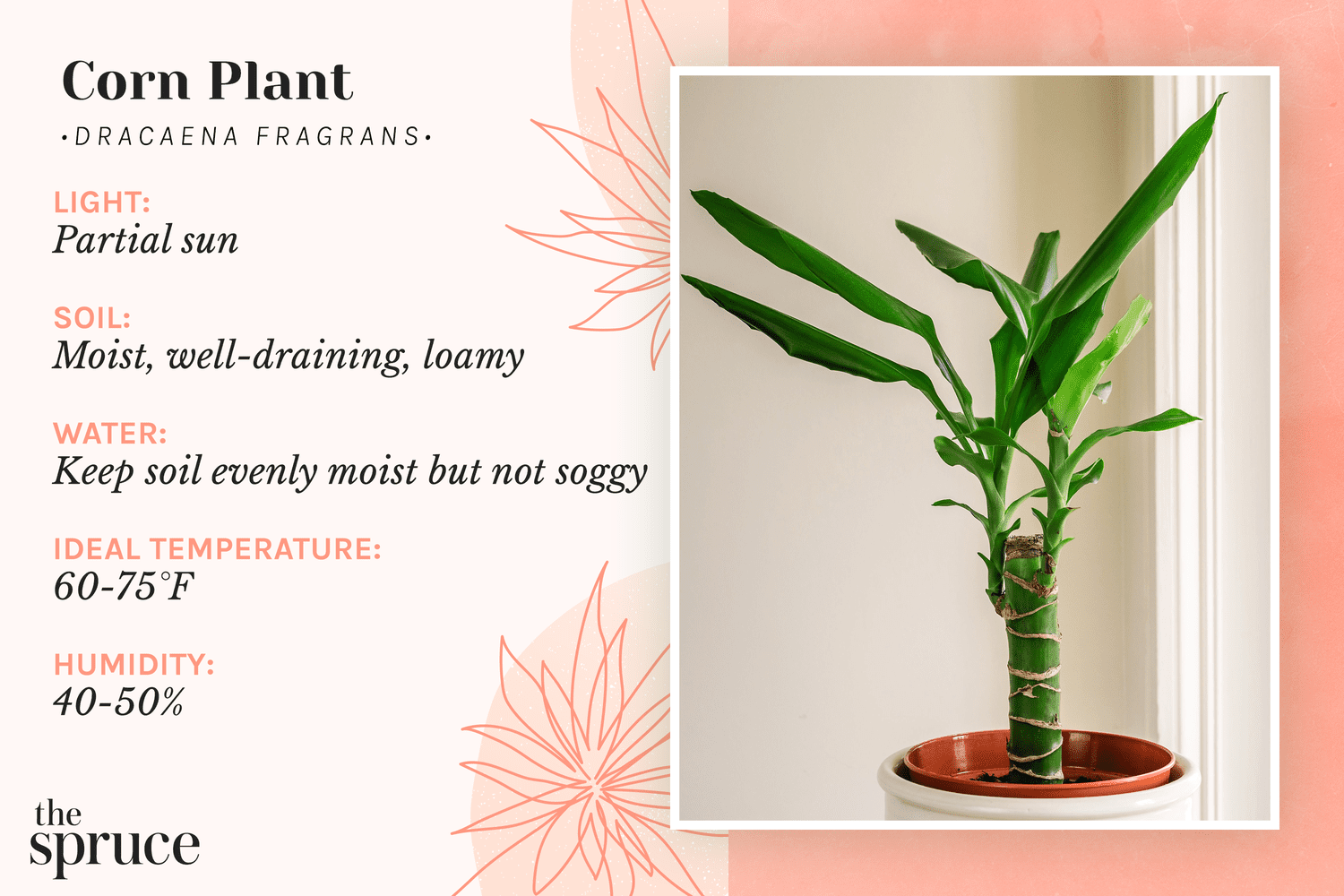
The ideal indoor location for a corn plant is near a window with filtered sunlight. Too little light will result in the leaves losing their color variegation and might stunt the plant’s growth. Exposure to direct sun can burn the plant’s leaves and cause them to wilt. Outdoors, the plant does best in a shadier spot.
Soil
A loose, loamy potting soil mix is the best option for growing corn plants. Make sure the soil has good drainage because its roots don’t do well in standing water.
Don’t Miss
Water
Keep the soil evenly moist but not soggy during the growing season (spring through fall). Reduce watering in the late fall to winter. However, never let the soil completely dry out. Soil that is too wet or too dry will lead to plant health issues.
Temperature and Humidity
Corn plants thrive in temperatures from 60°F to 75°F—so avoid exposing them to any temperatures below this range.
The plant’s natural environment is humid, so maintain humidity levels between 40 to 50 percent for optimal growth. To raise the plant’s humidity, you can place this plant in your bathroom if you can provide adequate lighting in there, place a pebble tray underneath your plant’s pot, or place a humidifier nearby.
Fertilizer
Corn plants prefer organically rich soil. Use a balanced liquid fertilizer every other month throughout the growing season and feed sparingly, if at all, over the winter.
jardineria Profesional / Photo Illustration by Amy Sheehan / Cara Cormack
Types of Corn Plants
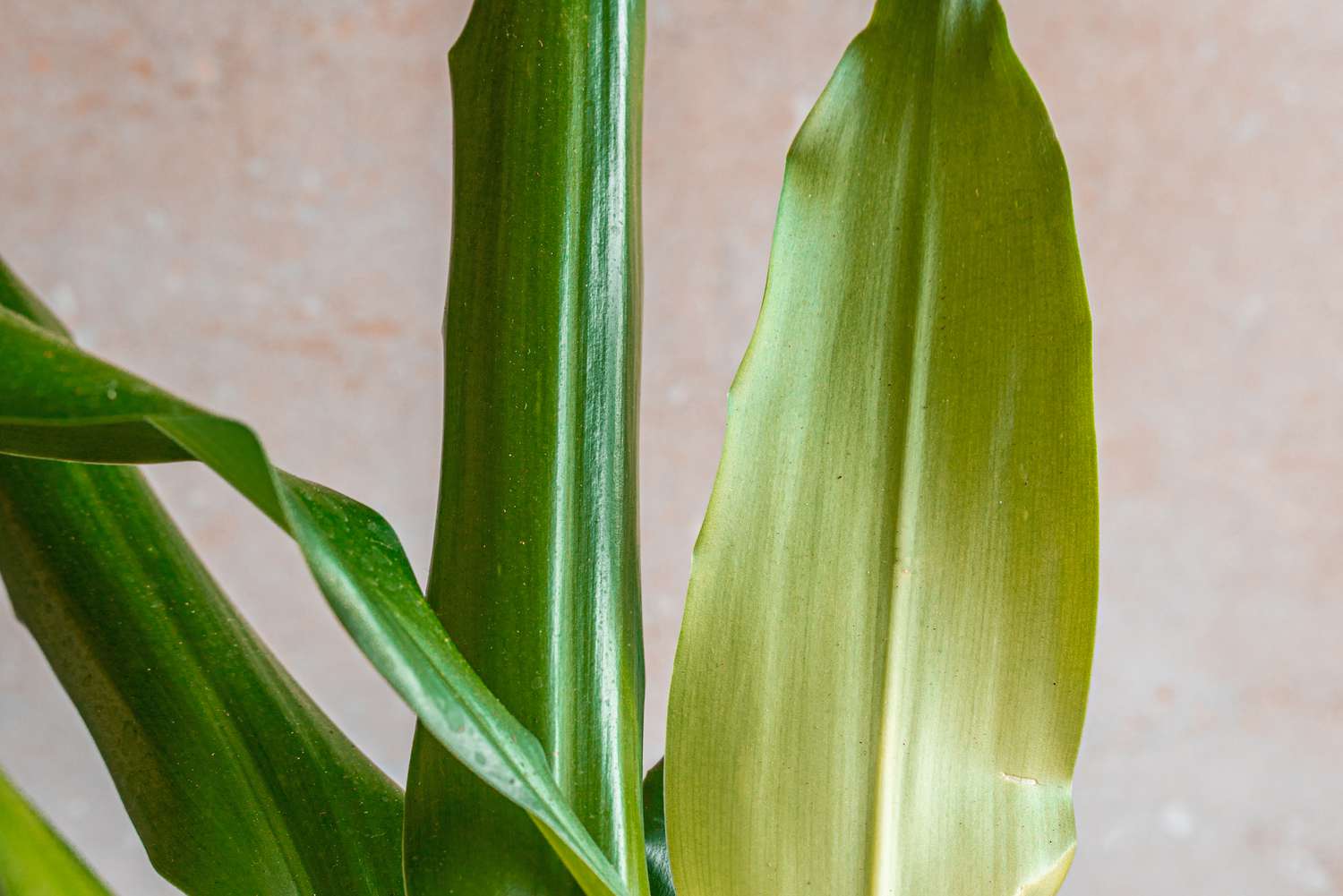
- Dracaena fragrans ‘Massangeana’: This variety is the most common and features a yellowish lime-green stripe down the center of its leaves.
- Dracaena fragrans ‘Lindenii’: The leaves of this variety have yellow edges rather than a stripe down the center.
- Dracaena fragrans ‘Victoria’: This variety is very similar to ‘Massangeana’; a yellow stripe runs down the center of its leaves, but it has smaller, wider, and almost triangular leaves. It is rarely available in garden centers.
- ‘Lemon Lime’:Dracaena fragrans This variety has leaves with white-yellow stripes around gray-green centers.
- Dracaena fragrans ‘Limelight’: This cultivar has glossy yellow-green leaves that gradually turn lighter lime-green as they mature.
Pruning
Corn plant leaves don’t need a lot of pruning, but you can always cut the tops of the canes if your plant has grown too tall for your space. Otherwise, remove yellow leaves so your corn plant can focus its energy on creating new leaves.
Propagating Corn Plants
It’s best to propagate corn plants in spring or summer, but if you keep your plants indoors in a climate-controlled room, you can propagate these plants any time of year.
Top cutting or stem cutting is the best method of propagation. Here’s how to do it:
- Snip the top of the plant just below the leaf line with clean hand pruners. Include one node (round white bump on the stem). For a stem cutting, take an 8-inch piece.
- Place the cutting in a jar of room temperature water, so half of the cutting is submerged and the other half is uncovered.
- Place it in a warm, partially sunny spot. Watch for root growth at the leaf nodes underwater and some leaf growth at leaf nodes at the top end.
- Top off the water every few days as it evaporates. Every other week, change the water entirely to discourage algae or bacterial growth.
- Once the stem produces roots over 1 inch long, pot the rooted end in moist, peat moss. Place it in a warm, partially sunny spot.
Alternatively, you can plant a fresh-cut stem cutting in moist peat moss and wait for new leaf growth. It will likely root, but you can’t see the root growth, unlike the clear jar of water, so you won’t know if it’s making progress. Propagation is more successful when rooting the stem in water.
How to Grow Corn Plant From Seed
To enhance germination, soak the seeds in room-temperature water for three to five days. Sprinkle two to three seeds in a small pot of moistened seed starting mix. Cover the seeds lightly with the seed starting mix.
Place the pot on a warm, germinating mat and cover with clear plastic wrap. Maintain soil temperature between 68°F to 80°F under a grow light or bright, indirect sunlight. The soil should remain slightly moist. If the soil is too damp, the seeds can rot.
Once you notice some growth (it can take as long as four to six weeks), remove the plastic. Transplant once the seedling develops two true leaves into a 3-inch pot using potting soil.
Potting and Repotting Corn Plant
Repot your corn plant every year or two into a slightly larger container (2 to 3 inches larger and deeper) with fresh potting soil.
When you are ready to repot the plant, remove the loose soil around it and carefully lift the plant from its base. Put an inch or two of fresh soil at the bottom of the new container and center the plant in its new container, making sure not to damage its roots in the process.
Fill the space around it with fresh potting soil, but do not pack it too tightly, ensuring the container maintains good drainage.
Overwintering
Bring your dracaena indoors when temperatures start to dip below 60°F. Or, if you have the plant in the ground, you can dig out the root ball (if you have a planter large enough for it) and pot it.
If you live in an area cooler than Zone 10 and leave the plant in the ground, the plant will die. However, before the first frost, you can take a stem cutting or cut off the plant top, propagate it indoors during winter, and plant it again in spring once the threat of frost is over.
Common Pests
Monitor the plants for spider mites, thrips, and scale, which is a common problem with many houseplants. These plants can cause leaves to look damaged and unhealthy, and you might even notice small insects moving around on the plant.
Dust the leaves of the plant regularly with a damp cloth to keep it looking its best and to prevent pests from colonizing.
How to Get Corn Plant to Bloom
Dracaena fragrans are not reliable bloomers, but when growing conditions are right, and the plant is mature (more than 5 years old), it can bloom one to three times per year. However, the chances of blooming are lower if your corn plant is kept indoors.
The flower stalks emerge out of the center of the leaf whorl and can grow up to 3 feet long. The flowers look like white spike balls, and as its botanical name suggests, it has a sweet fragrance when they bloom.
The scent can smell like a combination of jasmine, lilac, honey, and freshly cut grass. It blooms as the sun sets, each night for about a month. Each bloom drops at daylight, spurring another bloom to open the following evening.
Common Problems With Corn Plant
The corn plant is an easy houseplant to keep once you get the growing conditions correct. If any of these conditions are off, you may see some of the following issues.
Leaves Turning Yellow or Brown
If you find the leaves on your corn plant turn yellow or brown, there may be something wrong beyond basic leaf decay that occurs in the lifecycle of a leaf. The most likely cause is either too much sun exposure (brown), overwatering (yellow then brown), or possibly a nutrient deficiency (yellow). Reassess the plant’s light, soil moisture, and fertilization schedule and adjust accordingly.
Leaves Curling
Curling leaves on your corn plant can be caused overwatering or underwatering, or tap water with an excessive amount of minerals (let water sit for an hour before using to allow things like chlorine to dissipate). It can also be caused by excessive heat or dry air, so check to make sure the plant isn’t near any heat vents or getting too much bright light.
Leaves Drooping
If you notice your corn plant leaves suddenly drooping more than usual, it might be caused by sudden exposure to extreme heat or cold temperatures, or possibly root rot or underwatering (though that drooping would come on slowly, not suddenly).
Dry Leaf Tips
Corn plants that get too little water or too much dry air can get dry leaf tips and edges. Add a humidifier to increase humidity. Increase the plant’s water, but never let the soil get soggy. Yellowing tips can also be caused by too much plant food or fluoride in the water. Use distilled water to avoid leaf tip burn.
Sudden Loss of Leaves
Too much water and poor drainage can cause a sudden loss of leaves or root rot. Make sure the soil is well-draining and the plant’s pot has several drainage holes.
Dry Patches on Leaves
If you put corn plants in direct sun, your dracaena plant may get round dry patches and streaks on the leaves. Move the plant to a spot with less direct sunlight.
Foul Aroma
If you notice the bottom half of the corn plant blackening or smelling foul, it has likely developed soft rot, a bacterial infection with no remedy. The plant will start to look and smell like it’s rotting. The plant is not salvageable, and it should be discarded.
Is This the Right Plant for You?
- You have enough space in your home to house this houseplant since it can grow tall
- You have a spot in your home that’s near a window with filtered sunlight
- You don’t have any pets (cats or dogs) since this houseplant is toxic
-
Are corn plants easy to care for?
Corn plants are easy to care for once their climate, sun, and water needs are met. Maintain those conditions, and your plant can live for many years.
-
How fast does corn plant grow?
Corn plant generally has a slow-to-moderate growth rate. It’s optimal growth conditions are hard to get exactly right, so this may slow down the plant’s growth rate as well.
-
What’s the difference between corn plant and sweet corn?
The corn plant is entirely unrelated to sweet corn—the stalky vegetable that’s grown for food. They are similar in name only.
-
Can corn plants grow in water?
Corn plants can grow in water. Leave a propagating stem cutting in water past the point of the roots being 1-inch long, and they’ll turn into water roots, drawing oxygen from the water.
-
Can I cut the top off a corn plant and replant it?
Yes! Cutting off the top of a corn plant and replanting it is simple as can be, just remember which part of your cutting is the top versus the bottom—incorrectly replanting your corn plant will inhibit growth