



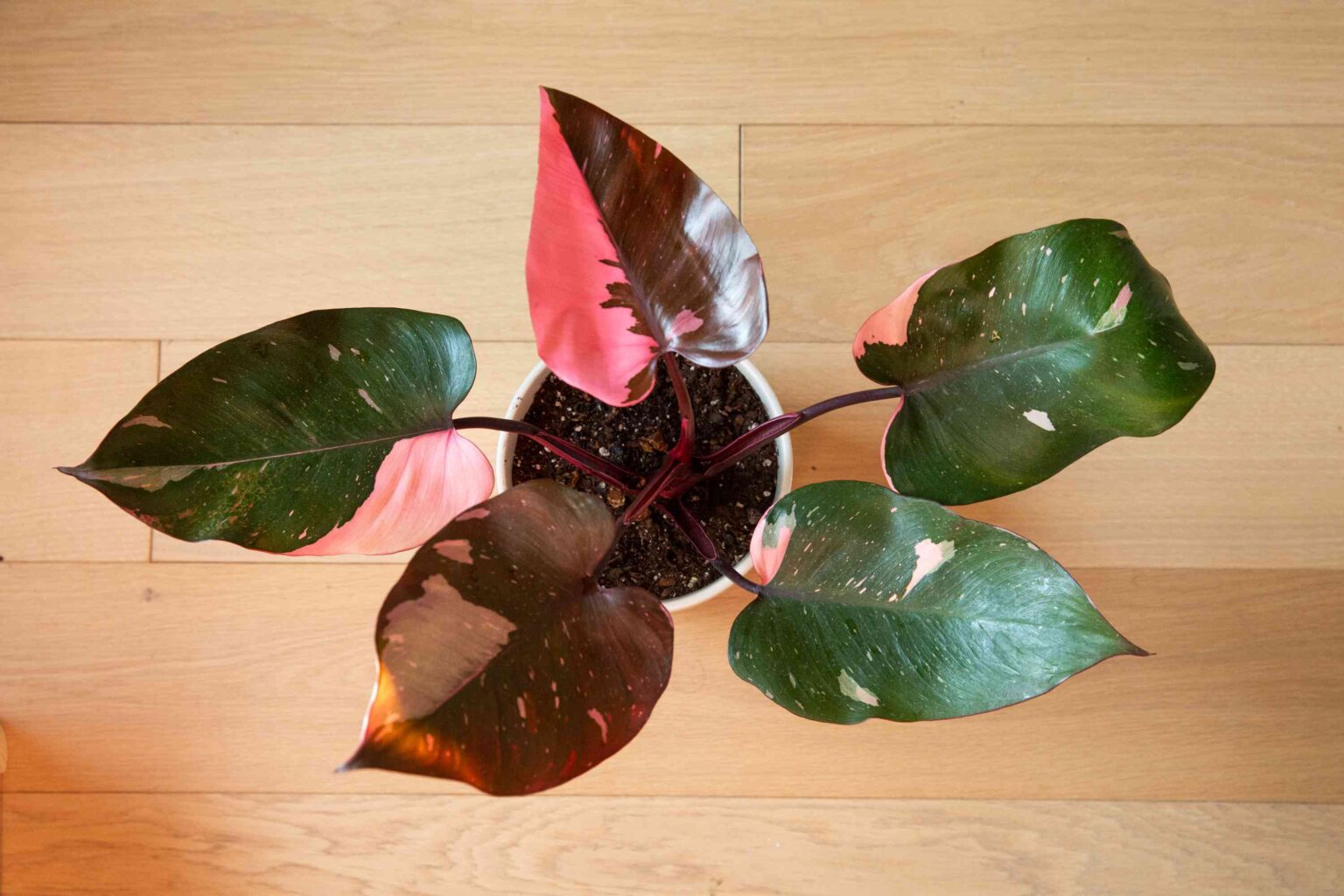
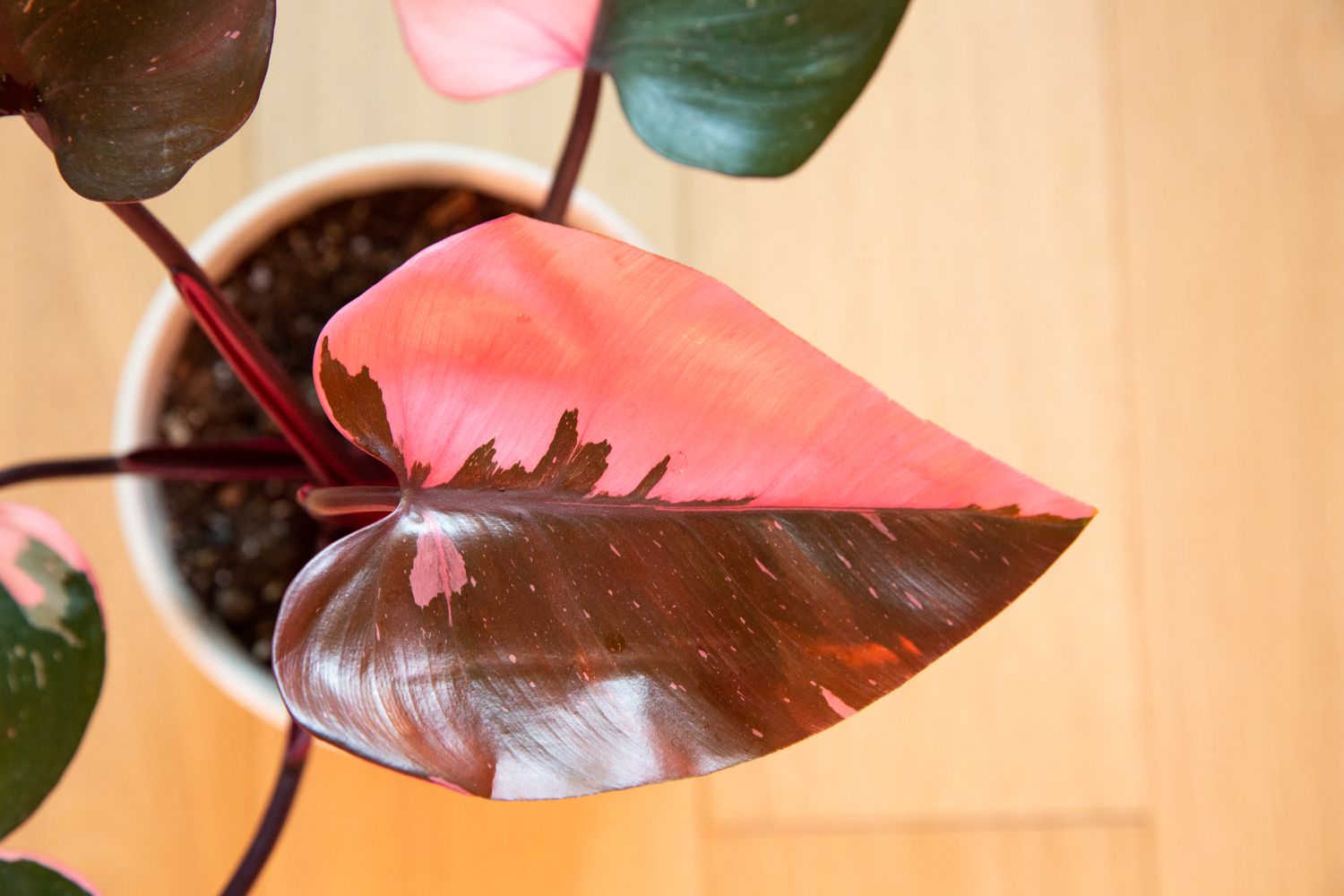
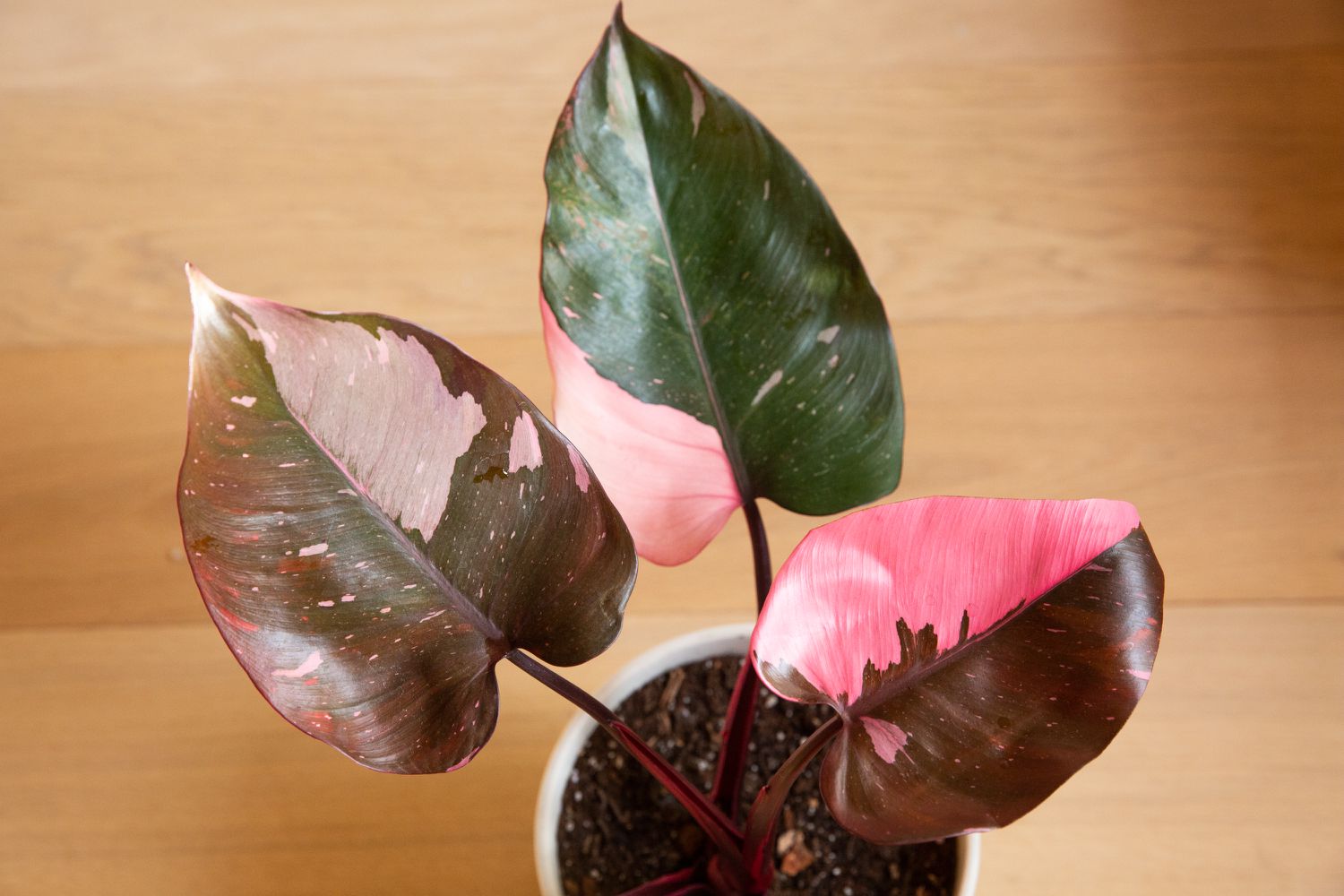
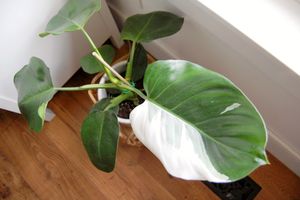
The gorgeous and highly sought-after pink princess philodendron (Philodendron erubescens ‘pink princess’) is at the top of many plant collectors’ wish lists, and for good reason. Characterized by deep green, heart-shaped leaves with bubblegum pink variegation, the pink princess is truly unique in the plant world.
Learning how to properly care for your pink princess philodendron is the key to ensuring it maintains its brilliant pink variegation. Luckily, as with many plants in the philodendron genus, its care is pretty straightforward.
| Botanical Name | Philodendron erubescens ‘pink princess’ |
| Common Name | Philodendron pink princess, blushing philodendron |
| Family | Araceae |
| Plant Type | Perennial |
| Mature Size | 4-5 ft. tall, 2-4 ft. wide |
| Sun Exposure | Partial |
| Soil Type | Loamy, moist but well-draining |
| Soil pH | Acidic |
| Bloom Time | Spring, summer |
| Hardiness Zones | 9a, 9b, 10a, 10b, 11a, 11b |
| Native Area | South America |
Pink Princess Philodendron Care
Native to Columbia, the pink princess philodendron is a tropical aroid in the Araceae family. Despite its high price tag, this colorful plant is actually pretty easy to care for. That being said there are a few key things to keep in mind to ensure that you are maximizing the variegation on the leaves.
jardineria Profesional / Phoebe Cheong
jardineria Profesional / Phoebe Cheong
jardineria Profesional / Phoebe Cheong
Light
If you want pink princess philodendron’s stunning variegation, you’ll need to provide several hours of bright, indirect light.
This philodendron can also tolerate a few hours of direct light when grown as a houseplant. If you don’t provide enough light, the plant’s leaves will stay green, so try getting a grow light to get the pretty pink color the pink princess philodendron is known for.
Soil
As an aroid, the pink princess philodendron enjoys airy, well-draining soil that is high in organic matter. A mixture of one part standard potting soil, one part perlite, and one part orchid bark is ideal for the pink princess.
Water
Allow the top half of the soil to dry out between waterings, then water well. Usually, this means you will need to water your plant approximately once a week in the spring and summer, and once every one to two weeks in the fall and winter.
As a general rule, it is far easier to overwater your pink princess philodendron than to underwater it so if you are unsure about whether it needs water, err on the side of caution and wait another day.
Temperature and Humidity
Though pink princess philodendron can survive in typical household temperatures and humidity levels, they absolutely thrive in warm, humid conditions. Avoid exposing your pink princess philodendron to temperatures below 60°F for a longer-lasting plant.
Fertilizer
During its growing season (spring and summer), the pink princess philodendron benefits from regular monthly feedings with a balanced liquid fertilizer.
Repotting Pink Princess Philodendron
Pink princess philodendron should be repotted once every one to two years, when it’s outgrown it’s previous container. If you’re noticing roots coming out the drainage holes, it’s a clear sign to repot.
You can technically repot your philodendron any time of the year, but spring and summer are the best times to do so. Here’s how to get it done.
How to Repot a Pink Princess Philodendron
- Gently remove your pink princess from its old pot.
- Loosen the root ball to remove as much of the old soil as you can.
- Fill a new pot that is 1 to 2 inches larger in diameter than the previous pot with a one-inch layer of fresh, well-draining soil. Ideally the pot has one or more drainage. holes.
- Place your plant in the new pot and hold it in position with one hand while you fill in around the plant with more fresh soil.
- Water the newly repotted plant thoroughly, allowing the excess water to drain from the pot’s drainage holes.
- Return the plant to its original location and resume a regular watering schedule.
Propagating Pink Princess Philodendron
Pink princess philodendron is easy to propagate through stem cuttings if you’re looking at add new plants to your collection. Not only is this an affordable way to have more plants, but it can also make your plant look bushier and encourage more variegation. Here’s how you can propagate your pink princess philodendron by stem cuttings in just a few easy steps:
- Using a pair of sharp, sterilized pruning shears or scissors, cut a piece of stem that has two to three leaves and two to three exposed nodes at the bottom of the cutting.
- Remove any lower leaves from your cutting, leaving just two to three leaves at the top.
- Place the cutting in water and put it in a location that receives bright, indirect light. Ensure that the exposed nodes of the cutting are submerged in the water at all times.
- Replace the water with clean water at least once a week. Within two to three weeks you should begin to notice new roots sprouting from the cutting.
- Once the roots have grown to at least one inch in length the cutting can be transferred back to soil. Use a well-draining potting mix and water thoroughly.
Common Pests & Plant Diseases
The pink princess philodendron is susceptible to a number of common houseplant pests and diseases. Common pests include mealybugs, aphids, spider mites, scale, and fungus gnats. Common diseases include root rot, which is a result of overwatering, and rust spot, which is a result of a fungal infection.
Pests to Watch
If you spot mealybugs, aphids, or spider mites on your pink princess, apply an insecticidal soap or neem oil sprayed on the plant.
Common Problems With Pink Princess Philodendron
With the proper care, pink princess philodendrons are relatively problem-free. Common issues with these tropical plants usually arise from improper watering, humidity, or light.
Leaves Are Not Pink and Losing Variegation
This is most likely due to a lack of light. Ensure that your plant is exposed to bright, indirect light and avoid low light conditions to promote strong variegation. It is important to catch and fix this problem early since a fully reverted pink princess philodendron cannot recover its variegation.
My Plant Is Getting Leggy
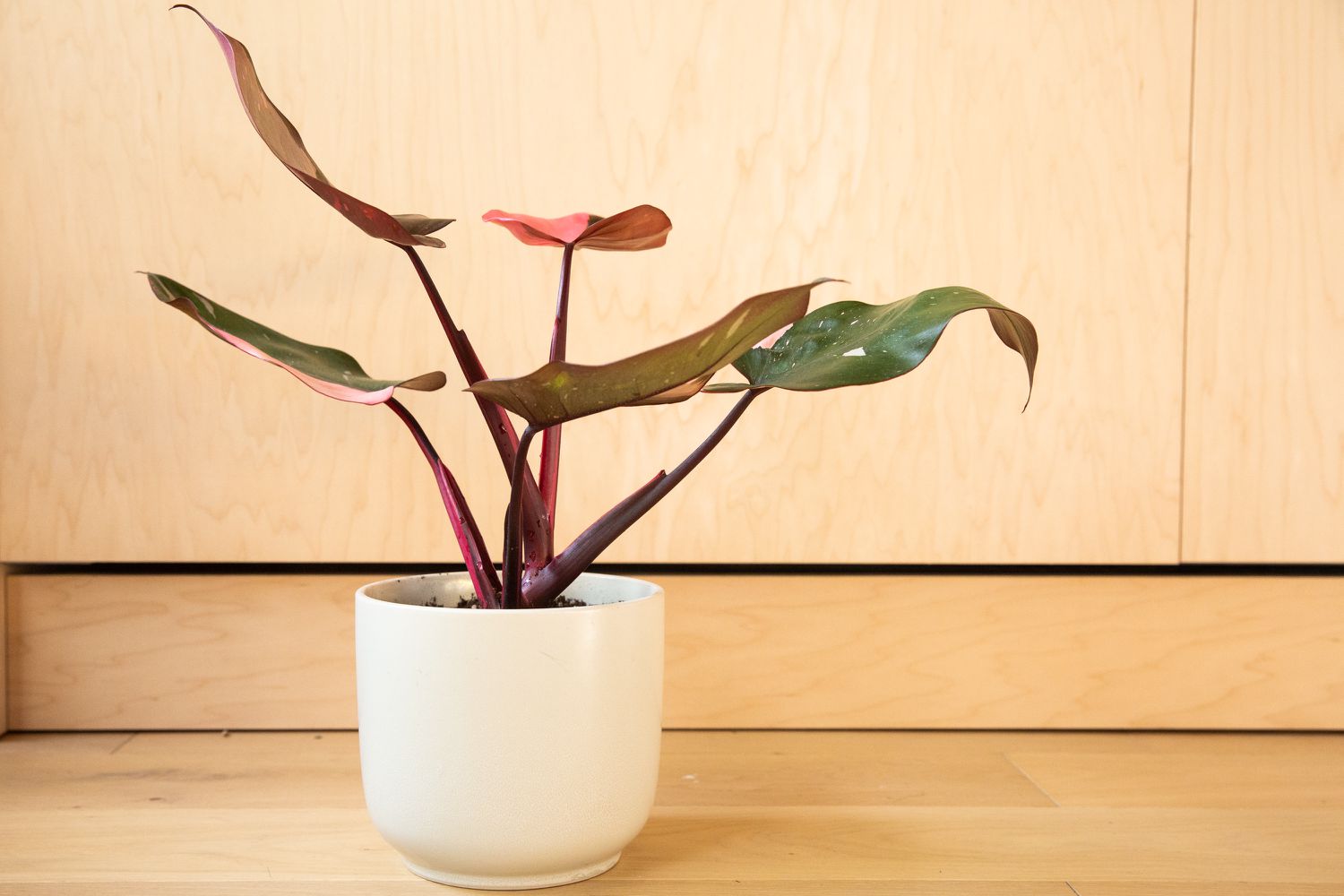
Leggy growth is an indication that your plant is not receiving enough light, causing the leaves to reach for more light. Move your plant to a brighter location to prevent new growth from coming in leggy.
Leaves Are Turning Brown
Browning edges on the leaves of a pink princess philodendron are usually a result of a lack of humidity which causes the leaves to begin drying out. Unfortunately there is no way to reverse the damage once it has happened, but if you increase the humidity around the plant it should prevent further browning.
Leaf Variegation Is Turning Brown
The last thing you want to see on your beautiful pink variegation is brown spots, but unfortunately this can happen if you have exposed your plant to light that is too harsh. The delicate pink spots on the leaves are prone to burning under harsh lighting conditions, resulting in large burn spots.
Buying a Pink Princess Philodendron
Looking to acquire one of these stunning Philodendron? Here’s what you need to know about buying a pink princess philodendron.
Tips for Buying In-Store
- Expect to pay a bit more. These plants will cost more than your average philodendron since they are rarer. You can expect to see them now ranging from $30 to $60.
- Check for spots or brown leaves. This way, you can ensure you aren’t getting an infected plant.
- Browse your local hardware store. Even though these plants were once only found on specialty websites, you can often score them at The Home Depot or Lowe’s.
Why Are Pink Princess Philodendrons So Expensive?
These tropical plants have exploded in popularity due to their stunning foliage, making it difficult for growers to keep up with demand. The cost is especially high since these plants are not easily grown from seed due to their variegation being a result of mutation. This has resulted in sky-high prices, despite the fact that pink princesses are actually relatively easy to care for.
That being said, the cost of pink princess philodendrons has recently started to drop since they are now being mass-produced.
How Much Do They Cost?
At their peak in 2021, a fully established and mature pink princess philodendron could cost upwards of $2,000 (yes, you read that right). Meanwhile, single-leaf cuttings of this coveted plant were going for hundreds of dollars on sites like Etsy and Facebook Marketplace.
Today, this plant is far more accessible and affordable. While it may still cost a few hundred dollars for a well-established and highly variegated mature pink princess philodendron, you can easily score a smaller plant for under $50, while cuttings are going for as little as $5 to $10 a pop.
What to Look for When Buying a Pink Princess Philodendron
To ensure that you get a healthy and highly variegated specimen, it’s important to examine the plant’s foliage and stems before you buy. Look for consistent variegation, and check the plant’s petioles for variegation too.
Since these Philodendrons are prone to fungal rust spot diseases, you should also check the leaves for small brown spots to ensure you aren’t getting an infected plant.
Where to Buy a Pink Princess Philodendron
Etsy, Facebook Marketplace, and plant collectors used to be the only places where you could find a pink princess philodendron, but today they can be found at many different houseplant shops, nurseries, and more.
Stores like The Home Depot regularly carry these plants (depending on where you are), while Costa Farms now offers the pink princess philodendron online.
Is this the right plant for you?
A PINK PRINCESS PHILODENRON IS A GOOD CHOICE IF:
- you’re a houseplant enthusiast or are looking for something unique
- you don’t mind shelling out a bit more money for a special houseplant
- you have the perfect spot for it that receives bright indirect light
-
How big do pink princess philodendrons get?
Mature pink princess philodendrons can reach between 4 to 5 feet tall and 2 to 3 feet wide at maturity.
-
How fast do pink princess philodendrons grow?
Pink princess philodendron’s growth depends on its care conditions. Generally, this plant can push out several new leaves within a growing season under the right conditions, but not receiving enough light and water will slow down growth.
-
What’s the difference between the philodendron pink princess and the philodendron pink congo?
The philodendron pink princess has stable variegation, as it occurs due to natural processes, whereas the philodendron pink congo variegation is a result of chemicals that are injected into the leaves, usually reverting to green a couple of months after being purchased.
-
Does pink princess philodendron need a moss pole?
Yes, it is a good idea to support pink princess philodendron’s growth with a moss pole. It’s a self-heading philodendron, meaning it grows upwards. A moss pole will stop it from falling over.