



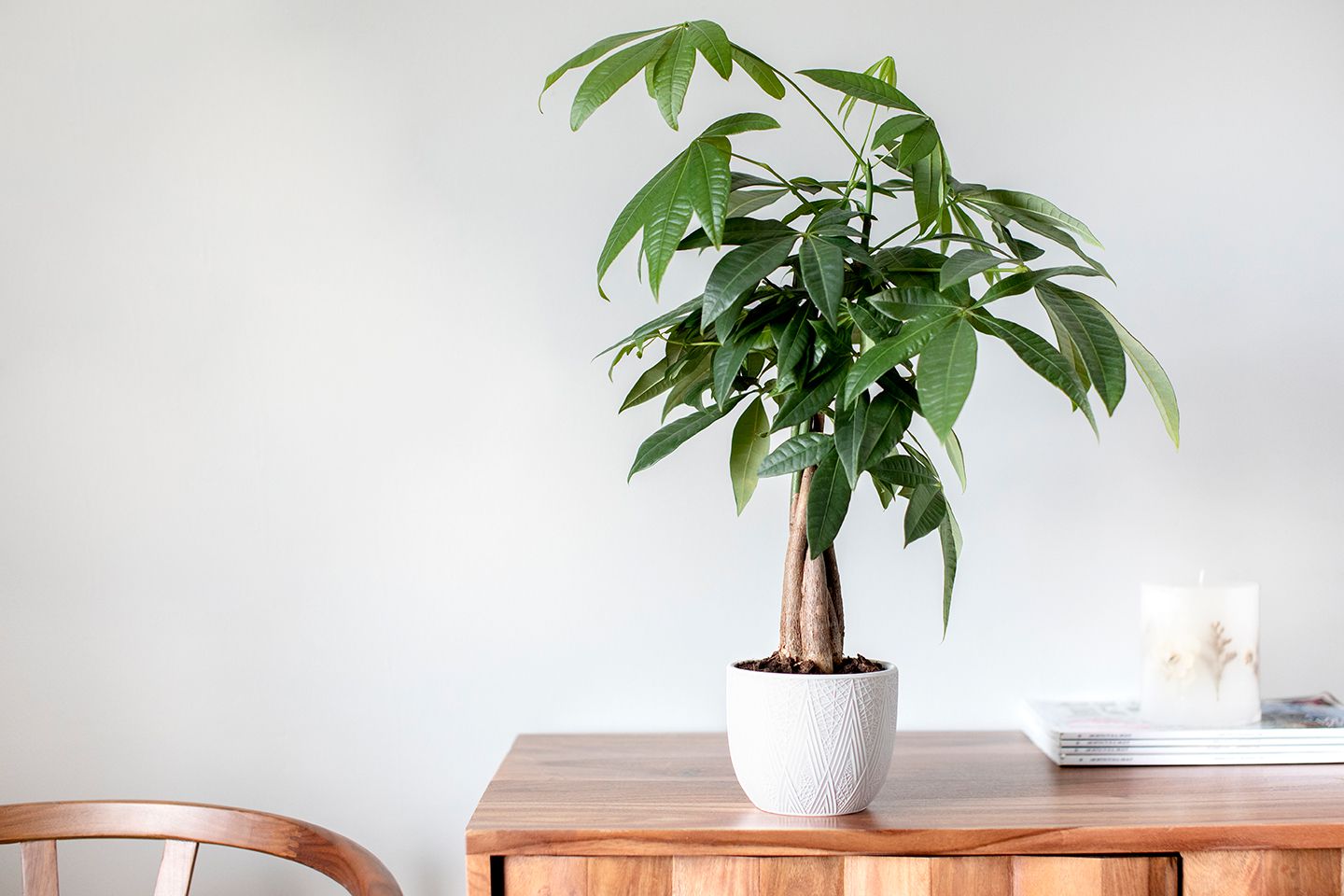
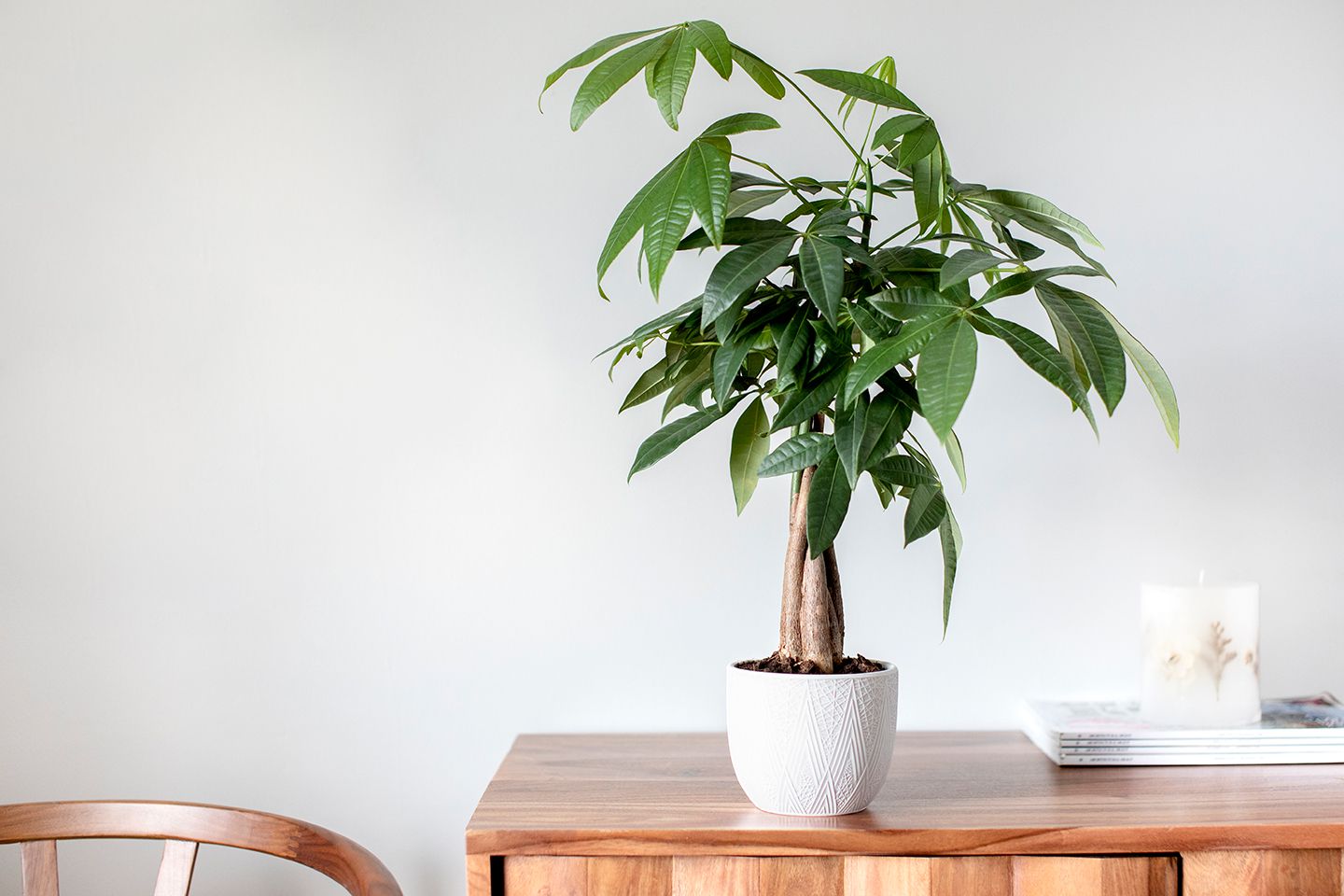
The money tree (Pachira aquatica) is an easy-care plant that grows quickly—up to 24 inches a year. It will eventually reach 6 to 8 feet tall in maturity. This hardy plant likes bright to medium indirect sunlight for six hours per day and should be watered when the top inch of soil dries.
With proper care, this long-living plant can live for up to a decade. This plant is prominent among those who practice feng shui and is believed to create positive “chi,” or energy. Read on for our care and growing guide.
jardineria Profesional / Kortney Gloska
| Common Name | Money tree, Guiana chestnut, Malabar chestnut |
| Botanical Name | Pachira aquatica |
| Family | Malvaceae |
| Plant Type | Tree |
| Mature Size | 6-8 ft. tall and wide |
| Sun Exposure | Full, partial |
| Soil Type | Moist but well-drained |
| Soil pH | Acidic, neutral |
| Bloom Time | Spring |
| Flower Color | Yellow, white |
| Hardiness Zones | 10-12 (USDA) |
| Native Area | Central America, South America |
Why Are Money Trees Considered Lucky?
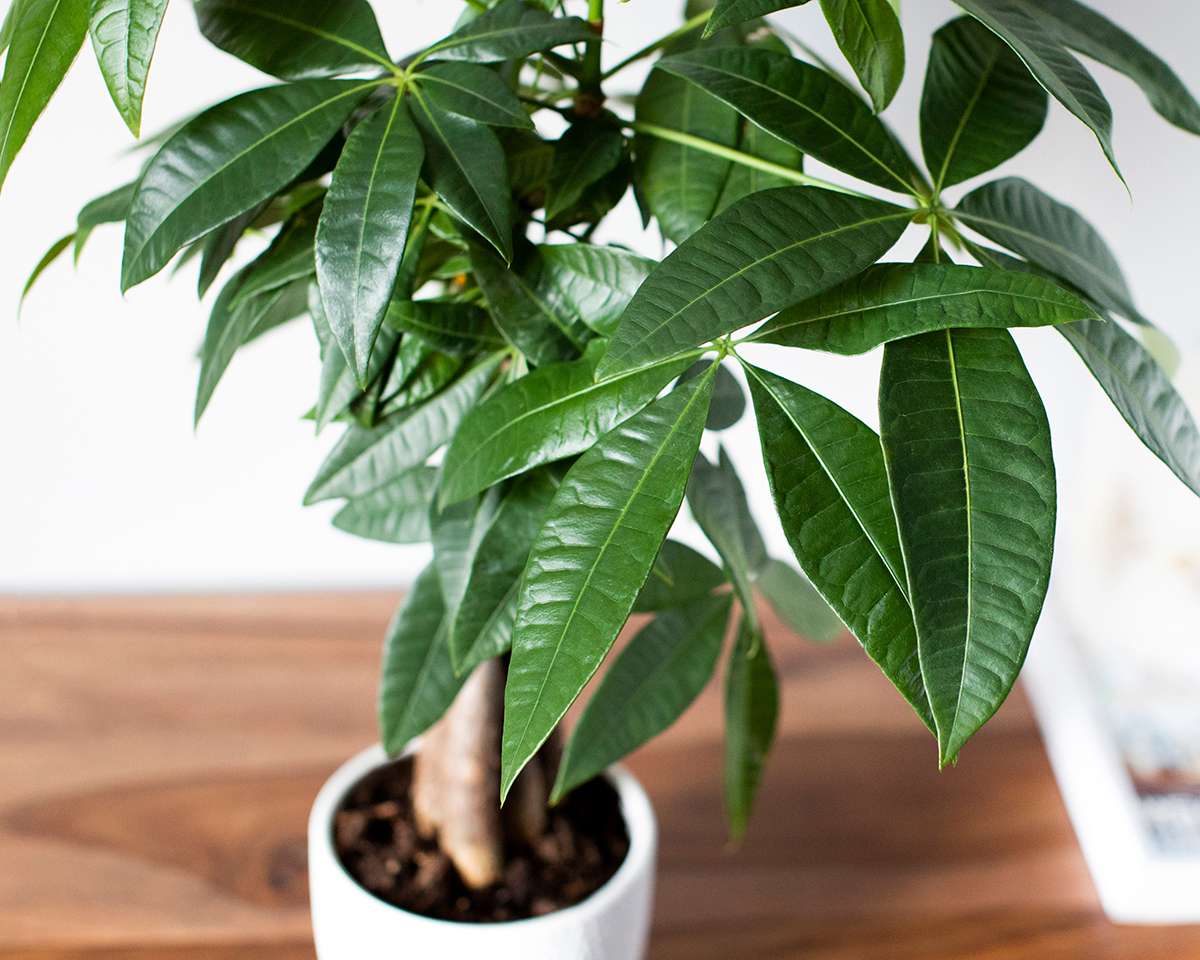
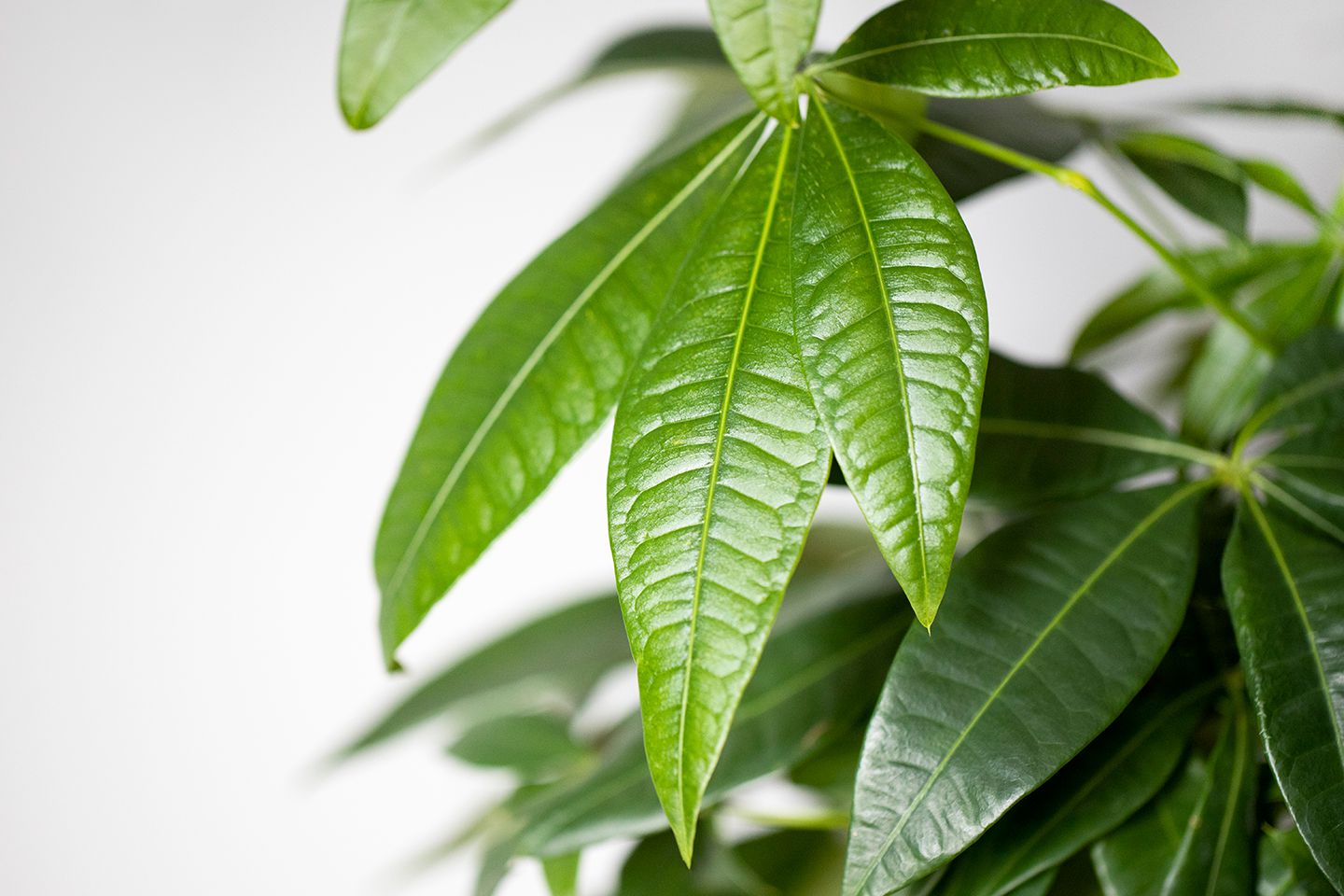
Money trees are thought to bring prosperity and good energy to a home. Money tree leaves are palmate leaves, meaning they have leaflets radiating off of a shared point. There are five leaflets per grouping, with five being a lucky number in feng shui (there are five elements in the universe). The braided stem will supposedly help maintain and preserve the wealth it promotes. Place it in the money corner of your home for extra luck.
How to Plant a Money Tree
A well-draining, nutrient-rich potting soil is best for money trees. A houseplant mix works fine. Pick a pot with large drainage holes, as money trees don’t like their roots to sit in water and easily develop root rot if proper drainage is not provided.
Put down a layer of soil in the pot, then gently loosen the money tree’s rootball and place it in the pot. Fill in around with fresh soil and water deeply.
How to Care for a Money Tree
Here are the main care requirements for growing a money tree indoors:
- Place the plant in a spot where it gets at least 6 hours of bright to medium indirect sunlight every day.
- Use well-draining potting mix high in peat moss.
- Water it regularly to keep it evenly moist, but reduce watering in fall and winter.
- Fertilize monthly during the growing season in spring and summer.
How Much Light Does a Money Tree Need
Money trees should be placed in bright to medium indirect sunlight for at least six hours a day. If you don’t have a sunny window that provides enough light, use grow lights.
What Soil Should You Use With a Money Tree
Money tree needs a potting medium with excellent drainage, ideally, a potting mix that is peat-moss-based because it provides the necessary soil acidity of a pH between 6.0 and 7.5.
How Often Should You Water a Money Tree
Money trees should be watered regularly, when the top half of the soil in the pot has dried out. This ends up being about once a week or every two weeks. Water more frequently in the spring and summer months and cut down on watering in the fall and winter.
The best way to avoid overwatering your plant is to ensure that the container and the soil have the proper drainage.
What Temperature and Humidity Does a Money Tree Need
Money trees should be kept between 65°F and 75°F and should never be placed near any warm or cold drafts. If your home’s humidity is particularly dry (below 30%), add a humidifier.
How Often Should You Fertilize a Money Tree
Fertilize your plant monthly throughout the spring and summer, when the plant is actively producing new leaves, and every two months throughout the fall and winter. An all-purpose houseplant fertilizer that has been diluted to half-strength will work best.
How to Braid a Money Tree
Any young and healthy money tree with thin and flexible trunks can be braided together and potted together as one plant. Any stem over a foot long should work. Here is how it’s done:
- Unpot plants. Take the plants out of their pots. Remove leaves in the middle of the stem that will interrupt braiding.
- Loosely braid the stems. Place a twist tie, ribbon, or piece of string around the end where you start to hold it together. Begin braiding. As you braid, keep it loose; tight braiding damages the plant because as it grows, the stems thicken.
- Test the braid. Release your hold on the braid and see if it stays, but if not, gently and loosely tie it at the finished end with string, a twist tie, or a piece of garden tape.
- Repot the plant. Pot the plant in its new home. Stabilize the braided plant with a stake placed shallowly in the pot and loosely tie it to the stem with string.
- Place in a shady area. Braiding will stress the plants so place the pot in a partially shady area for about a month to recover.
- Remove the tape. After a few months, cut off the tape or string holding the braid.
Braided Money Trees
Most commonly, money trees are sold as small plants with a braided trunk made up of three, five, or seven stems. Braiding is thought to trap good fortune in its folds. The trees are braided at the nursery when they are young and will continue to grow this way as they mature.
How to Prune a Money Tree
Pruning is an important part of caring for your money tree, especially if you wish to braid it, train the plant as a bonsai, or control its size. Regular pruning of the lower leaves also helps to encourage new growth at the top of the plant.
Pruning Tip
Looking for the best pruners for your money trees? We tested and identified the top-rated pruning shears in our Lab to make sure your plants stay happy and healthy.
How to Propagate a Money Tree
jardineria Profesional / Phoebe Cheong
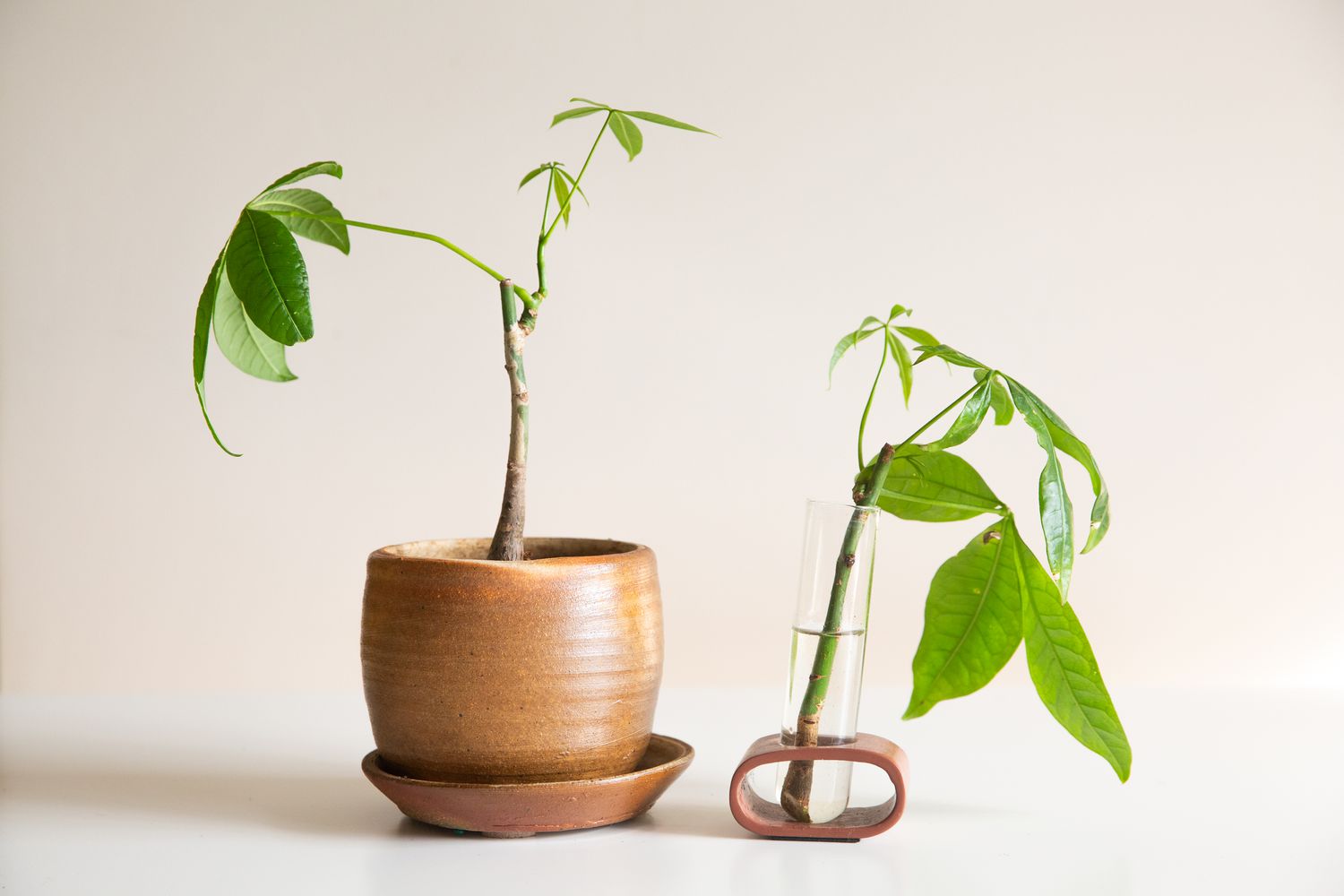
The easiest way to propagate a money tree is from stem cuttings in the spring or summer when the plant is actively growing.
- Take cutting. Take a cutting at least 4 inches long from a healthy, firm stem, and make sure it includes a couple of nodes.
- Remove lower leaves. Remove any of the lower leaves so none of them will come into contact with the water.
- Place in water. Place the cut end without any leaves in a glass of room temperature water. Change the water regularly to keep it clean and clear. Wait for roots to grow.
- Plant in soil. Once the cutting has grown roots a few inches long, plant it in a pot with potting mix.
Check out these detailed instructions for propagating a money tree.
How to Repot a Money Tree
Every year or two, check to see if roots are coming out the drainage holes are stick out the top of the soil—those are signs you need a bigger pot (an inch or two bigger in diameter than the current pot).
Repotting your money tree will likely result in it growing larger. Be aware, they can get quite big.
Common Money Tree Pests and Plant Diseases
Money trees are particularly susceptible to mealybugs and scale. If an infestation occurs, treat the plant immediately using a mild insecticide or horticultural oil, such as neem oil.
Common Money Tree Problems
Money tree plants are easy enough to grow and maintain but a couple of problems may occur, which are usually alleviated by following some simple care tips.
Yellow or Brown Money Tree Leaves
Typically yellowing or browning leaves indicate overwatering or underwatering. One way to tell the difference is to see if the leaves are both discolored and curling, which indicates underwatering. It could also mean you have given the plant too much or too little sunlight so you will need to change the plant’s location to see if it helps.
Soft Stems/Trunk
If the stems or trunk is becoming too soft and heading towards mushy, you are overwatering the plant. Dig up the plant and check for root rot, cutting off any soft and mushy roots. Remove as much soil as possible without harming the plant, and rinse the roots off. Repot the plant in a clean pot with fresh soil.
If all of the roots are mushy, you’ll have better luck propagating the plant.
Leggy Growth
If you notice there’s no new leaf growth and the plant looks too leggy, it may mean you are not giving it enough light.
-
How long do money trees live?
If grown in the right conditions and properly cared for, money tree grown indoors has a lifespan of at least a decade, often more.
-
Does the money tree flower?
When grown outdoors, money trees produce stunning yellowish-white flowers, which are eventually replaced by large seed pods with peanut-like nuts inside. However, when grown indoors the plant does not flower, as it requires pollination to do so—a task that is typically carried out by bats in the wild.
-
Can you put money trees outside?
In regions where nighttime summer temperatures do not drop below 50°F, you can move your money tree outdoors in the summer. Gradually get the plant used to the outdoors for two weeks. Place it in the shade for a few hours and bring it back indoors, then slowly move it to sunnier spots. A spot with dappled sunlight is ideal. Bring your money tree back indoors when nighttime temperatures dip below 50°F for a few nights in a row.
-
Is the money tree toxic to pets?
The money tree is pet-friendly and also safe for humans.
-
Should I mist my money tree?
No, you should not mist a money tree. Money trees prefer moderate humidity, but misting is completely ineffective at raising humidity. Only a humidifier is really effective at raising humidity.